Skip to content
Galaxy S26 Ultra’s Privacy Display: Balancing Screen Privacy with Reduced Brightness
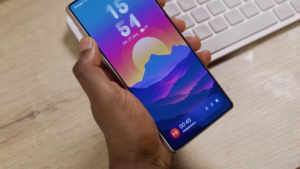
Even with Privacy Display disabled, lab testing reveal that the Galaxy S26 Ultra is dimmer than the S25 Ultra.
When Samsung unveiled the Galaxy S26 Ultra at their Galaxy Unpacked 2026 event, it undoubtedly caused a stir.
Above all, its Privacy Display is without a doubt the most significant new technology that attracted the most attention.
While phone manufacturers frequently aim to enhance their displays by making them brighter, larger, and with higher resolution, Samsung pursued something entirely different.
And you know what? It’s one of those ignored real-world issues that is eventually resolved.
We’re discovering some interesting features regarding the display now that we have the phone and are testing.
The most obvious finding from our testing so far is that the brightness is lowered while the Privacy Display is enabled, which is something I was concerned about with privacy screens in general.


More significantly, even with Privacy Display disabled, the S26 Ultra’s screen is not as brilliant as the preceding Galaxy S25 Ultra.
It’s important to compare the Privacy Display to its predecessor before discussing how it affects the Galaxy S26 Ultra.
To be honest, these findings are unexpected as Samsung has a history of increasing the brightness of their flagship device every year.
The 6.9-inch AMOLED screen has a maximum brightness of 2,600 nits, according to Samsung.
Our lab testing, however, reveals an overall peak brightness of 1,806 nits, which is somewhat less than the 1,860 nits we saw on the Galaxy S25 Ultra.
To be honest, when seeing the displays directly on under typical circumstances, there is a negligible variation that is nearly undetectable to the eye.
Please take note that we have contacted Samsung for comment and will update this article as soon as we receive a response.
How the Privacy Display affects brightness
The major drawback of utilizing a privacy screen protector, as I’ve frequently observed, is that it eventually dims the display.
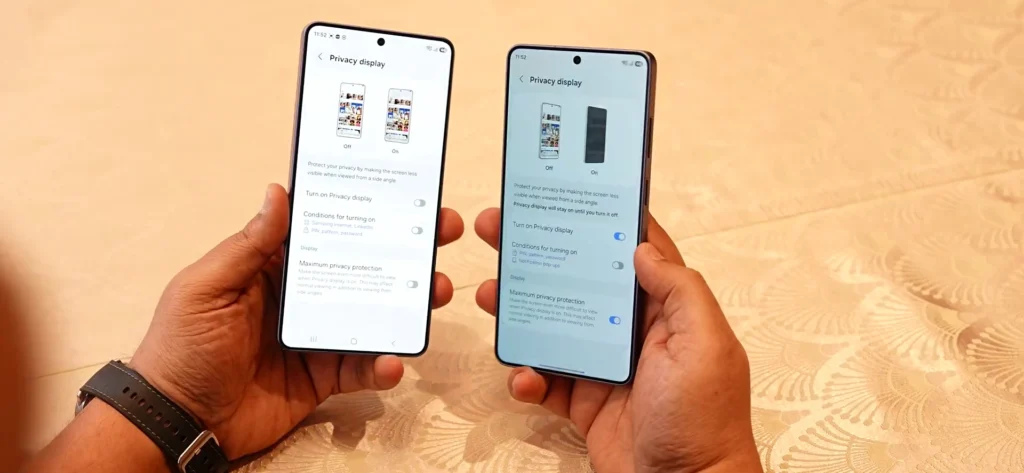
Samsung’s version, however, is built right into the panel and can be turned on or off, unlike other aftermarket guards.
This essentially solves my complaint about third-party protectors: once they are installed, they are difficult to take off.


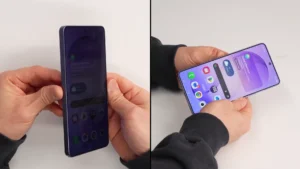
It should come as no surprise that once the Privacy Display is turned on, the display becomes significantly dimmer.
You must activate Maximum Privacy Protection in order to attain the maximum level of screen blocking.
Remind yourself that the Galaxy S26 Ultra’s display has a peak brightness of 1,806 nits, but that baseline is 1,209 nits when adaptive brightness is enabled while watching SDR material.
That number falls to 586 nits when both the Privacy Display and Maximum Privacy Protection are activated. This is a staggering 67.6% drop in light production.
The screen becomes quite difficult to see at 586 nits, especially in direct sunlight outside.
Whether you’re in a restaurant or on a train, you’ll notice a decrease in brightness even inside when Privacy Display is turned on. However, this is the price paid to keep shoulder surfers away.


Conclusion.
Given that it’s the first of its kind, Samsung will undoubtedly profit in the long term if other gadgets adopt this remarkable technology.
Given that it has the same starting price as its predecessor, it makes sense that the Galaxy S26 Ultra be the first to have this function, which offers enormous value.
I’m ready to tolerate this compromise for the assurance that no one can spy on my screen unless they are staring directly at it, even though our testing shows that the S26 Ultra is objectively dimmer than the S25 Ultra overall.
You are effectively exchanging a flagship viewing experience for a mid-range one at 586 nits in return for momentary seclusion.
However, at least you can turn this feature off to restore a brighter, more vibrant experience when you need it, unlike phones we’ve tested with annoyingly dim screens, like the Moto G Power (2025) with its dismal 521 nits.
Read more!