Skip to content

Why Apple’s IPhone Foldable Won’t Need to Dominate Right Away
The first iPhone Fold probably won’t sell like crazy in year one. And that’s not a failure. That’s Apple doing Apple things: shipping a first-gen product that proves the concept, learns in public, and sets up the version that actually takes over.
Right now, it’s only March, and somehow half the internet already “knows” Apple’s entire iPhone roadmap for 2026. Usually, that’s not shocking because Apple’s fall schedule is basically tradition: regular iPhone, Pro iPhones, done. But the talk this time is different.
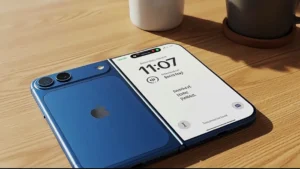
Multiple analysts and leakers are pointing to September 2026 as a turning point. Instead of a normal “vanilla” iPhone follow-up sitting next to the Pro models, we may finally get Apple’s big foldable: iPhone Fold… or iPhone Ultra… whatever name they slap on it.
And here’s the part people are missing: even if it launches and doesn’t immediately dominate, that can still be a win.
First, timing matters, and the latest chatter says Apple may not even treat the foldable like a standard September iPhone.
Mark Gurman’s reporting suggests the iPhone 18 Pro and 18 Pro Max come out in the usual September window, while the foldable could land later. And “later” might mean December, which is a totally different situation for sales expectations.
Because some projections floating around are wild. Like, “Apple will take 28 percent of global foldable sales in 2026” wild.
Do the math. If Apple releases a foldable in December, you’re asking it to grab over a quarter of the entire year’s foldable market in basically a few weeks. That’s not “ambitious.” That’s not “optimistic.” That’s impossible.
Could Apple do 5 percent in that time? Sure. Could it hit 10? Maybe, with massive supply and a perfect launch. But 28 percent in a partial month doesn’t even pass the common sense test.
So if you see headlines later like “iPhone Fold underperforms,” remember: underperforms compared to what, exactly? A fantasy projection?
Now let’s talk about 2027, because that’s where some people are placing the real bet: Apple becomes the top foldable vendor, maybe sells 20 million units, and starts eating Samsung’s lunch.
Could that happen? Yes. Is it guaranteed? No.
There are at least three reasons the first-gen iPhone Fold might not convert hype into instant mass adoption.


One: price and durability expectations.
Rumors say Apple could make certain build compromises to keep the price from going completely nuclear. And on paper, that sounds reasonable. But Apple buyers don’t “do” compromises well.
If you’re paying Apple money, you’re expecting the thing to feel like a tank, the hinge to feel perfect, the display crease to be minimal, and the whole device to survive real life.
Foldables already have a reputation with some people as “cool but fragile.” Apple can reduce that fear, but it probably won’t erase it on day one.
Two: the design might feel… familiar.
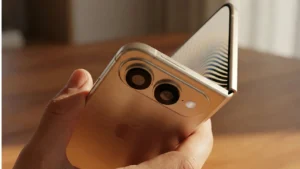
Based on leaks, the Fold doesn’t sound like it’s arriving as some totally new sci-fi object. It sounds like a premium book-style foldable that, from a distance, could resemble what Samsung and Google are already doing.
And that matters because Apple won’t just be selling to iPhone fans who want the newest thing. Apple also wants to pull in people who already own a foldable. Those users have seen the form factor. They know the pros and the annoyances. So if Apple’s first attempt looks “safe,” a lot of foldable owners might shrug and stick with what they have.
Three: the foldable market itself isn’t exploding.
For years, analysts have predicted foldables would take off at a much faster rate than they actually have. They’re still a niche. A growing niche, but a niche.
So expecting Apple to show up and instantly move tens of millions of units is basically dumping the entire industry’s unmet expectations onto one first-gen product. That’s not a fair benchmark.
And this is the main point: not every new Apple product has to strike gold immediately.
People forget Apple has plenty of products that start slow, find their audience, then hit their stride later. Think about it like this: first-gen Apple stuff is often the “statement,” second-gen is the “sweet spot,” and third-gen is the “everyone suddenly has one.”
Even in iPhone land, not every model is meant to be the universal best-seller. If Apple has an “Air” style iPhone that’s popular but not dominant, is that a flop? No. It’s just a product that fits a specific buyer.
The iPhone Fold can be the same thing.
If it launches and sells “only” a few million units, that might still be a healthy result for a super expensive, first-gen, new-category iPhone variant.
The real goal for Apple in year one is simpler:
- Make it feel like an Apple product.
- Make the software feel finished.
- Avoid major durability drama.
- Avoid a delay into the following year.
- And prove there’s a long-term foldable iPhone roadmap.
If Apple nails those basics, then the second-gen iPhone Fold is where things get scary for Samsung. That’s when you can expect refinement: stronger materials, better hinge engineering, more confident design choices, maybe a thinner body, better cameras, better battery efficiency, and the kind of “okay, now it’s obvious” polish Apple is known for.
So when the first-gen iPhone Fold drops and the internet starts scorekeeping like it’s the Super Bowl, I want you to remember this:
- A moderate hit is still a hit.
- It doesn’t need to outsell the entire foldable industry overnight.
- It just needs to arrive, work, and build momentum.
If you want, I can do a follow-up ranking what Apple must get right on day one: hinge, crease, battery, cameras, iPad-style multitasking, all of it. If that sounds useful, hit like, subscribe, and comment “FOLD” so I know you’re watching for this launch.
The iPhone Fold doesn’t have to dominate immediately to matter. If Apple gets the first one mostly right, the second one is the real threat. And if you’re expecting instant 28 percent market share in a December launch window… you’re not predicting Apple. You’re predicting a miracle.
Read More: