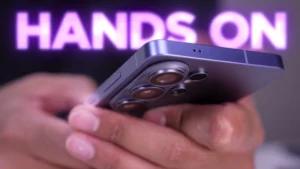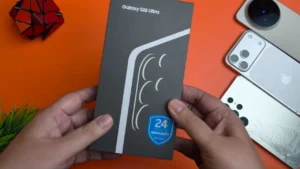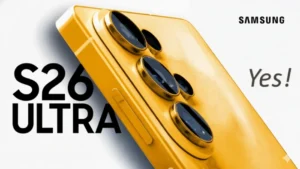
Get an exclusive first look at the innovative features and sleek designs of the Samsung Galaxy S26, S26 Plus, and S26 Ultra before their global launch.
The most detailed preview of Samsung’s next flagship smartphones has been provided via a recent leak from the always trustworthy Evan Blass.
With a few adjustments to set the Ultra apart from its brothers, the Galaxy S26, Galaxy S26 Plus, and Galaxy S26 Ultra all have unified designs and were released in four primary colors.
Less than two weeks remain till the Galaxy S26 series’ introduction. Samsung has already announced a number of pre-order offers in many nations to commemorate the event.
Furthermore, price details for one of Samsung’s important markets have surfaced.
Leaker Evan Blass a reliable leaker has now released high-resolution, watermark-free product renderings of the whole Galaxy S26 family, which means Samsung is getting ready to reveal it on February 25.
Instead of adding the previously rumored Edge or Pro versions to the lineup, Samsung will, as anticipated, be replacing the Galaxy S25, Galaxy S25 Plus, and Galaxy S25 Ultra (now $759, renewed on Amazon).
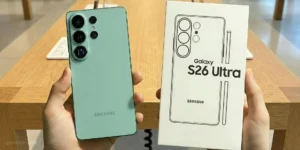
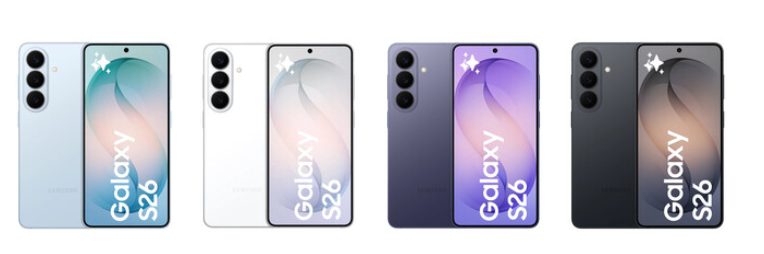
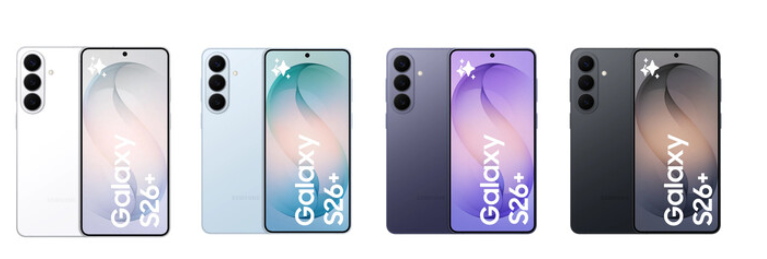
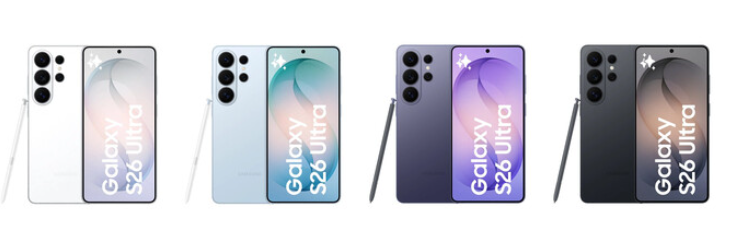
The leaker claims that Samsung plans to provide all three smartphones in the following color options: Sky Blue, Cobalt Violet, White, and Black.
However, we anticipate that the business will also provide as-yet-unpictured online exclusive versions.
However, the pictures provide the best glimpse to date of the primary colors that the Galaxy S26, Galaxy S26 Plus, and Galaxy S26 Ultra will come in.
In the end, the three seem more identical than in earlier iterations, with the Galaxy S26 Ultra differing somewhat from its brothers in terms of appearance.
The Galaxy S26.
The Galaxy S26 Plus.
The Galaxy S26 Ultra.
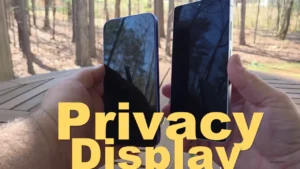
The operation of the Samsung Galaxy S26 Ultra Privacy Display’s anti-shoulder surfing feature.
Using integrated electronic privacy screen technology, the Samsung Galaxy S26 Ultra offers a revolutionary privacy display feature that shields private data from prying eyes.
Physical privacy screen covers that degrade display quality are no longer necessary thanks to our integrated anti-shoulder surfing feature, which limits screen visibility from side angles while preserving crystal-clear viewing for the primary user.
What is the Ultra Privacy Display on the Samsung Galaxy S26?
This electronic privacy screen technology smartphone feature is integrated into the OLED panel itself, in contrast to conventional privacy screen coverings that adhere to the phone’s surface.
The Samsung Galaxy S26 Ultra privacy display is a major advancement in security technologies for smartphones.
The switchable privacy layer One UI 8.5 settings menu allows users to turn the functionality on or off, giving them more freedom than physical filters.
This technology was created by Samsung utilizing their in-house Flex Magic Pixel system, which limits off-angle visibility by controlling pixel-level behavior.
When the privacy display is turned on, the effective viewing angles are drastically reduced, making any material on the screen seem blurry or obscured from anybody looking from the sides.
The Galaxy S26’s anti-shoulder surfing function offers security on par with physical privacy screens without compromising touch sensitivity, color accuracy, or brightness—all of which are sometimes compromised by add-on filters.
Users have never-before-seen control over when and how their privacy protection activates because of the technology’s intricate software controls that are built into Samsung’s One UI 8.5 interface.
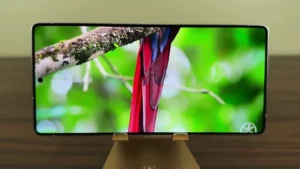
When looking directly at the screen, the screen is still completely readable; however, as the viewing angle rises, or shifted it becomes harder for some one by the side to read.
The Operation of Electronic Privacy Screen Technology
Samsung’s Flex Magic Pixel technology, which blocks side visibility by rerouting light at the hardware level, is the foundation of the privacy display capability.
In order to make screen material more difficult to read from oblique angles while maintaining clarity for the primary viewer, the system modifies individual pixel behavior in real time, perhaps with AI aid.
Compared to conventional privacy filters, which only use physical layers to lower overall brightness and viewing angles, this is a significant improvement.
Samsung has uniquely incorporated the specific display hardware needed for the electronic privacy screen technology smartphone into the OLED panel of the Galaxy S26 Ultra.
Long-term development of this capacity is indicated by the system’s reference to Samsung patents such as “Displays with Adjustable Angles-of-View” that the firm filed years ago.
In order to provide an effective privacy barrier without sacrificing user experience, the technology dynamically modifies light output depending on viewing angle detection.
-The control interface that makes these hardware capabilities useful for daily usage is provided via software integration via One UI 8.5.
The operating system controls which applications or content categories are protected, when privacy protection kicks in, and how strongly it blocks side visibility.
Instead of being static like physical filters, the hardware and software provides privacy protection that adjusts the actual use patterns.
Privacy Display Auto Mode Features for Congested Areas.
The Samsung Galaxy S26 Ultra’s privacy display auto mode crowded situations feature is among its most inventive features.
all Buses, trains, metros, elevators, and cafes are examples of this busy public places where the phone Auto Privacy toggle automatically activates the privacy filter.
Users don’t have to remember to manually enable privacy measures when they enter risky circumstances thanks to this context-aware protection.
In addition, the system has Scheduled the set Privacy mode, which is lets for users to program when, it will automatically activate, much ”like Do Not Disturb”.
Users may plan privacy protection to be used during their daily travel windows if they ride on public transit at regular times.
Without the need for frequent human modifications, this automation guarantees protection during regular susceptible times.
Read More.