Google briefly introduced a new Android app called COSMO, labeling it an “experimental AI assistant application,” then quickly made it much harder to find. The listing appeared on the Play Store with the package name com.google.research.air.cosmo, hinting that this was coming out of Google’s research pipeline rather than the polished product track.
If that sounds a lot like the existing Gemini app, you’re not alone. The immediate question was simple: what is COSMO for, exactly?
What Google Actually Shipped
According to the Play Store description, COSMO is an experimental assistant for Android devices, a vague positioning that doesn’t clearly separate it from Gemini. Early impressions suggested a testbed more than a consumer-ready tool, especially given how rough parts of the listing looked, including screenshots presented in odd aspect ratios.
Availability also appeared limited. Even on Pixel phones, the app didn’t show up for every region, which fits the pattern of a controlled experiment rather than a broad launch.
What COSMO Can Do (And How It Runs)
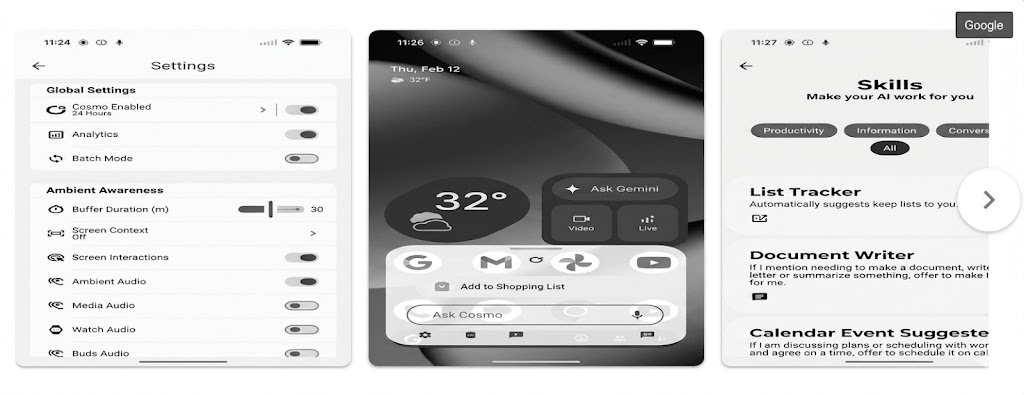
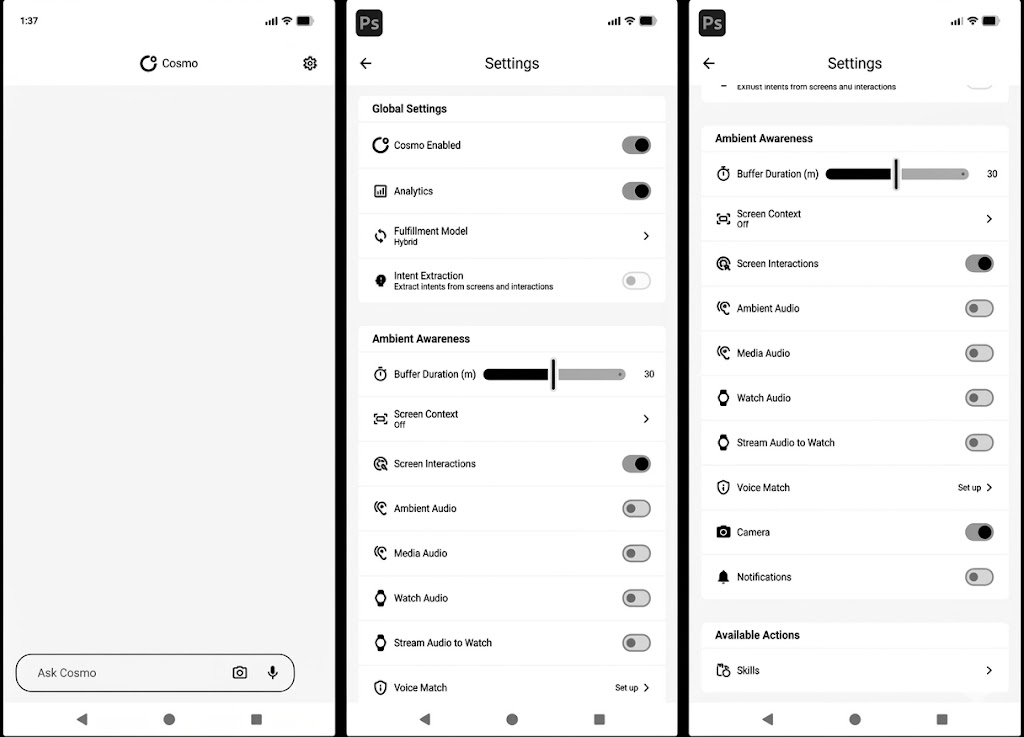
Digging into settings revealed the most concrete clues about COSMO’s purpose: it can run using a local Gemini Nano model, a remote “PI” server, or a hybrid mode that switches between local and remote depending on what’s available. That architecture suggests Google may be testing performance, latency, privacy tradeoffs, or reliability across on-device and server-based inference.
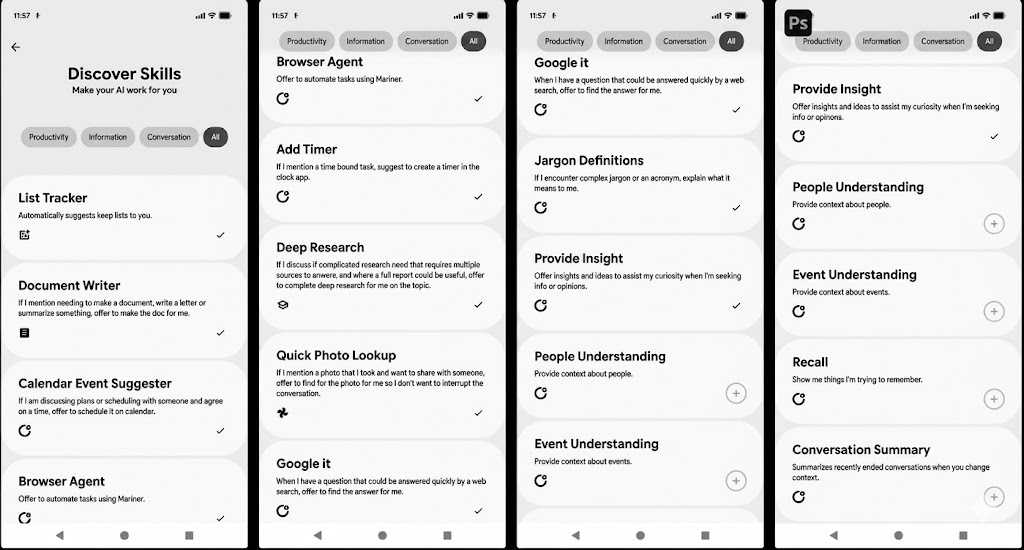
COSMO is also designed to use Android’s AccessibilityService API, which can enable an assistant to interpret what’s on your screen. In practice, early testing indicated that this screen access capability wasn’t fully working yet. COSMO includes multiple specific assistant skills, though several are not enabled by default, reinforcing the impression that Google is experimenting with a toolkit rather than shipping a single, finished experience.
Overall, interacting with COSMO reportedly felt familiar if you’ve used an AI assistant before, but noticeably rougher than the Gemini app, with fewer refinements and more unfinished edges.
Update: Google Pulls the Listing
On May 1, 2026 at 2:31 PM ET, COSMO’s Play Store listing was pulled. People who had already installed the app could still view the store page while logged into the same account, but new users were met with a “not found” message. That quick reversal lines up with the idea that COSMO wasn’t ready for wide visibility, or that Google didn’t intend it to be publicly discoverable yet.
Google has a long history of testing AI features in public, but this kind of rapid appearance-and-disappearance is unusual enough to raise eyebrows.
Conclusion
For now, COSMO looks less like a Gemini replacement and more like an internal experiment that briefly escaped into the open: a flexible assistant framework that can toggle between on-device Gemini Nano and a remote backend, with ambitions around screen-aware help via accessibility features.
Until Google explains what COSMO is meant to be, the best takeaway is that Google is still actively probing how assistants should run on Android: locally, remotely, or somewhere in between. If COSMO returns, the next listing will ideally answer the question the first one didn’t: who this app is actually for, and what it does better than Gemini.
Read more!