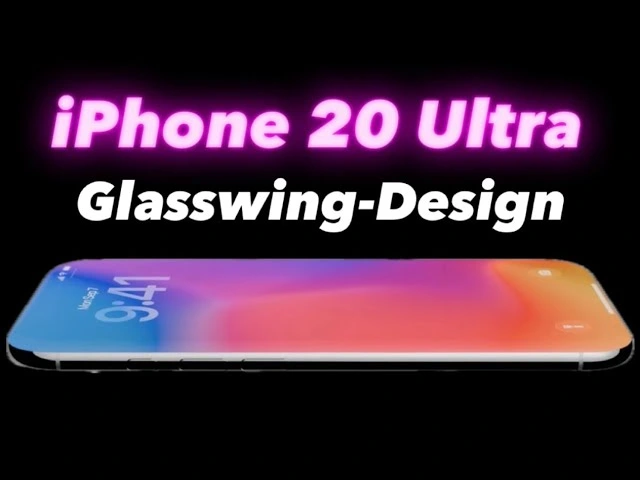
Apple’s next iPhone 20 aims for sleek design with exciting new upgrades.
Next year’s so-called iPhone 20 is rumored to be Apple’s dream “all-screen” iPhone. But a reputable leaker says that headline feature might not happen, because Apple still can’t reliably hide Face ID and the selfie camera under the display.
If that’s true, the iPhone 20 could end up as a smaller Dynamic Island… not a true slab-of-glass redesign.
Alright, here’s the situation. The iPhone is heading toward a big anniversary moment, and the rumor mill has been pointing to a special 20th-anniversary model with a wraparound, minimal-bezel, no-cutout front.
That’s the vision Jony Ive talked about for years: a clean sheet of glass, with nothing interrupting the screen.
But a new post from leaker Fixed Focus Digital throws cold water on that, saying Apple is still “a long way off” from a truly cutout-free iPhone display.
So today, I’m going to walk through what’s supposedly slipping, why it’s so hard, what Apple might ship instead, and how this connects to a bigger leak: Apple expanding the iPhone lineup to as many as seven models by 2027, including a foldable.
First, let’s define the “standout feature” that could be in jeopardy.
The iPhone 20 rumor is basically no notch, no punch hole, and no Dynamic Island. Just screen. For Apple to do that, two major systems have to go under the panel.
One: the selfie camera.
Two: Face ID’s sensor array, which is more complex than a standard camera because it relies on a set of components to map your face in 3D.
Hiding any camera under a display is already tough, because the display sits on top of it, and displays are not naturally “camera-friendly.”
They scatter light, reduce sharpness, and can introduce haze, weird color shifts, and loss of detail. You can compensate with software, but there’s a limit.
People will accept a slightly softer under-display selfie cam on some phones, but Apple’s whole brand is consistency. If it looks worse than the current front camera, Apple tends to wait.
Now multiply that problem for Face ID. It’s not just taking a picture. It needs clean, reliable sensor performance in lots of lighting conditions, at different angles, with different faces, and it needs to be secure. If under-display materials mess with the signal, you don’t just get a lower-quality selfie.
You get failed unlocks, slower authentication, and potentially security concerns. That’s a bigger deal.
So Fixed Focus Digital’s claim is basically this: Apple isn’t making enough progress on under-display tech, so instead of deleting the cutout entirely, Apple might just keep shrinking the Dynamic Island.
And honestly, that’s the most “Apple” outcome imaginable. If the tech isn’t ready at an Apple-quality scale, the company ships the next best step. Smaller cutout.
Tighter bezels. Better display curvature. Cleaner industrial design. But not the full sci-fi front.
Now, does that mean the iPhone 20 can’t be special? Not necessarily.
A 20th-anniversary iPhone could still deliver a big visual refresh by pushing bezels down further, tweaking the frame and glass shape, and making the front look more immersive even with a tiny island.
Think of it like the difference between “no cutout” and “barely noticeable.” One is the dream. The other is the realistic path.
Also, we’re still roughly 18 months out from that expected launch window. Apple can make breakthroughs late. Suppliers can improve yields.
Prototypes can suddenly click. So this isn’t a final verdict; it’s a warning: don’t assume the iPhone 20 equals “zero cutouts” yet.
Now let’s connect this to the other big piece of leaked info: the iPhone roadmap expanding toward seven models by 2027.
The leaks suggest Apple is heading into its biggest iPhone lineup rethink in years, with more tiers and more price points.
The reported mix includes an entry model, the standard iPhone, Pro, Pro Max, the ultra-thin Air line, a foldable, and then this anniversary device positioned as a design showcase.
And that strategy makes sense. Instead of trying to make one iPhone that satisfies everyone, Apple can sell you a “best fit” iPhone.
- Want the best cameras and performance? Pro.
- Want a lighter, style-forward phone? Air.
- Want a huge canvas? Foldable.
- Want the purest design flex? Anniversary model.
But here’s the key: if Apple can’t pull off true under-display Face ID and camera in time, that reshapes what the anniversary model is.
It might be less about “no cutout” and more about premium materials, extreme bezel reduction, and maybe some other headline upgrades like battery tech, new display efficiency, or an upgraded camera system.
Now, the foldable rumor matters here too.
Multiple reports suggest Apple’s first foldable iPhone could arrive in 2026, with a wider, more tablet-like form factor, high-end materials, and a lot of attention on the hinge and crease control.
Some analysts even peg pricing around $1,999.
If Apple really is shipping a foldable in 2026, that could become the experimental platform to mature under-display camera tech.
Not necessarily because Apple wants to experiment on customers, but because the foldable has different internal space constraints and a different buyer expectation.
Early adopters tolerate a bit more compromise.
So one possible scenario is Apple introduces early under-display components on the foldable first, then scales and polishes the tech for the anniversary iPhone later.
And if that’s the plan, it could mean the “true all-screen iPhone” slips beyond the iPhone 20 timeline.
Finally, there’s another big implication from the roadmap leaks: launch timing changes.
Reports claim Apple could stagger iPhone launches across the year instead of dropping everything in one September wave. That changes buying behavior, upgrade timing, and discount cycles.
It also gives Apple more flexibility if one model, like a foldable or an anniversary device, needs extra time for yields and manufacturing.
So if you’re tracking this as a buyer, the main takeaway is simple: the all-screen dream is still on the table, but the latest leak suggests it’s not locked for next year.
The safer expectation is a smaller dynamic island and a more incremental path toward the fully uninterrupted display.
If you want, I can do a follow-up breaking down the most likely iPhone lineup by year and which model makes the most sense to wait for depending on what you care about: camera, battery, design, or form factor. If that sounds useful, hit like, subscribe, and comment “iPhone roadmap” so I know to make it.
Bottom line: the iPhone 20 could still be a major redesign, but the clean, cutout-free front might be the hardest part to deliver on schedule.
An under-display camera is tough. Under-display Face ID is tougher. And Apple won’t ship it until it’s consistent, secure, and high quality at scale.
As more supply chain leaks and prototype reports land, we’ll get a clearer picture. Until then, plan for a smaller Dynamic Island, not a guaranteed all-screen miracle.
Read more;

This is so classy, amazing and great
Nice article, very informative! Thanks for sharing this useful info.
It’s indeed a good news, I really love iPhones
iPhone had always improved their design, the iPhone 20 will be a great sale
Thanks for providing this update
Gonna try it
Apple keeps pushing innovation forward; smaller Dynamic Island still sounds like exciting progress.
IPhone 20 ultra very good
Thank you for sharing us this important article.
Thanks exclusive IPhone 20 ultra advance sharing
Apple chasing the true all-screen iPhone sounds exciting, but shrinking the Dynamic Island first feels like the realistic step—quality matters more than rushing under-display tech.
🔥 The hype about the iPhone 20 is understandable, but a reality check is also needed!
Even if the true all-screen dream doesn’t come true, the design will still look next-level clean even with smaller Dynamic Island + thinner bezels 📱
Apple doesn’t always release anything that isn’t perfect—so delay means better finish 😉
Apple chasing the true all-screen iPhone sounds exciting, but shrinking the Dynamic Island first feels like the realistic step—quality matters
Good phone
Greetings grateful for your help and support
Great!
cool
very informative article
iPhone 20 pushing closer to a true all-screen design sounds exciting—finally feels like the future is here.
Nice one.. good phone
Apple is good product
Wow this is amazing 😍😍
Apple’s patience ensures iPhone 20 arrives polished futuristic and truly reliable
Amazing concept! If iPhone 20 really moves closer to an all-screen design, it could be Apple’s most futuristic device yet.
Thanks for this detailed breakdown! Really appreciate the honest take — most sites just hype it without explaining the actual challenges.
Apple keeps pushing boundaries, and the iPhone 20 concept feels like a true step toward a seamless all-screen future—cleaner design, fewer distractions, and a more immersive experience overall.
I love everything about Apple..
Great piece
Apple keeps pushing boundaries, and the iPhone 20 concept feels like a true step toward a seamless all-screen future—cleaner design, fewer distractions, and a more immersive experience overall.
This is so Nice, Lovely and Amazing
Wow this is one of the smart an the best phone…
The all-screen dream is exciting but hiding Face ID under the display is a massive technical challenge. Apple will nail it when the technology is truly ready.
Futuristic design! 🔥📱 All-screen looks insane! 🚀✨
The iPhone 20’s bold design is a stunning step closer to a true all-screen future—sleek, immersive, and ahead of its time.
Even if the full-screen display doesn’t arrive this year, a smaller Dynamic Island + minimal bezels would already be a big visual leap. Apple always prioritizes making Face ID and the front camera work perfectly, and that’s appreciated. If the iPhone 20 looks almost all-screen, that’s enough. Thanks for explaining the technical side so clearly.
Amazing
The iPhone 20’s push toward a true all-screen design sounds incredibly exciting and futuristic. If executed well, it could redefine smartphone aesthetics and user experience.
This phone is really amazing design.
Smaller Dynamic Island still sounds impressive, Apple never rushes unfinished innovation though.
Apple’s patience means iPhone 20 will arrive polished sleek reliable futuristic and revolutionary
Nice 👍.
They are late as always.
Better design and looking so beautiful
this design is amezing.
Iphone ultra fire ❤️
The Glasswing design concept is stunning! Even if true all-screen isn’t ready yet, iPhone 20’s 20th anniversary design will still be something incredibly special.
wow what a great phone .that screen is so good .thank you for this article
Very good phone and it’s degine also very good
Best
Best update.
Really enjoyed this detailed explanation! The idea of a fully all-screen Apple iPhone 20 is exciting, but it’s good to see a realistic perspective on the technical challenges. Apple taking its time to perfect under-display tech shows their focus on quality. Even a smaller Dynamic Island with cleaner design could still make this a major upgrade. Looking forward to what they deliver!