Skip to content
Apple’s First Foldable iPhone: What to Expect
Later this year, along with the iPhone 18 Pro series, Apple should make its maiden entry into the foldable smartphone market if the reports are accurate.
Numerous rumors about the iPhone Fold have created a rather thorough image of what to anticipate.
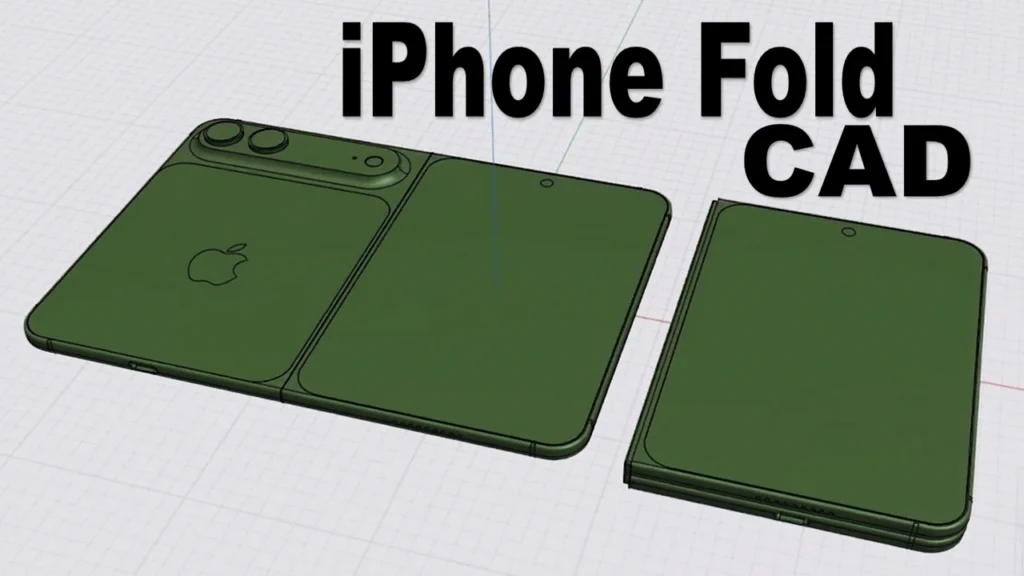
We have another peek at the purported design thanks to a fresh set of CAD-based renders of the gadget that Sonny Dickson provided.
During its multi-day event last week, Apple unveiled a number of new products, including the upgraded MacBook and iPad Airs as well as the entry-level MacBook Neo.
However, the much-discussed foldable iPhone seems to be on the horizon, so Apple fans may have more to look forward to this year.
Sonny Dickson, a longtime Apple leaker, posted a supposed rendering of the foldable iPhone’s design on X.
The image appears to be a screenshot from inside a Computer-Aided Design (CAD) program, but Dickson didn’t provide any further information.
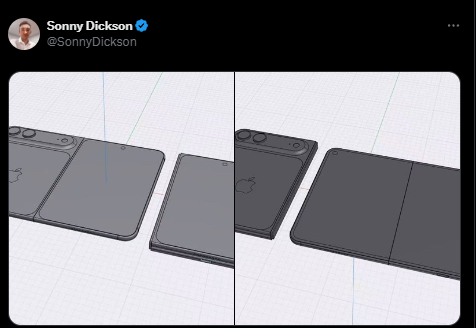

The pictures depict the gadget from the front and rear while it is closed, as well as when it is folded open.
The camera bump resembles the contemporary iPhone Air, although it has two lenses arranged horizontally rather than just one.
The remaining portion of the back appears to have the same two-tone pattern as the iPhone 18 Pro.
The device’s front features a slab of glass with a camera positioned at the top, just like you would expect from a foldable smartphone.
The front-facing camera is located in the upper left corner of a sizable display canvas that has a crease in the center when it is opened.
However, this depiction is insufficient to predict the actual appearance of the crease.
Potential customers of this foldable iPhone should be ready for a high price tag, even if Apple last week presented some entry-level products with comparatively low price tags.
According to reports, the corporation has made significant engineering efforts, particularly for the hinge mechanism and the interior display.
This next foldable iPhone model is expected to launch later this year, but given the present state of technology, that might obviously change.
Previous supply chain reports indicate that the device could use sophisticated materials to boost longevity, even if the CAD renders primarily display the outward design.
Among the rumored technologies are
1. Aluminum or titanium frame.
2. Mechanism of liquid-metal hinges.
3. Foldable display made of ultra-thin glass (UTG).
According to reports, Apple is putting a lot of effort into reducing the noticeable crease in the folding display, which has plagued many early foldable phones.
According to earlier speculations, the iPhone Fold will have a large cover screen and a design akin to Google’s first-generation Pixel Fold.
There is a single punch-hole cutout up top for the selfie camera on the front panel, which is said to measure 5.5 inches.
It is anticipated to have a 4:3 aspect ratio, which will make it more practical than the square-ish aspects of the majority of existing book foldables.
The camera plateau of the iPhone Fold, which has two sensors and an LED flash, is also visible. These should be 48MP cameras, according to the most recent rumors.
Rumor has it that the 7.8-inch primary screen will have a punch hole cutout in the upper left corner and a slight (though not entirely absent) wrinkle. It is anticipated that both selfie cameras will have an 18MP resolution.
Prosser and other leakers claim that the foldable iPhone will have a 5.5-inch exterior display and a 7.8-inch foldable screen when it is opened.
The foldable iPhone is 9 mm thick when folded and around 4.5 mm thick when opened, which is even thinner than the iPhone Air.
According to Prosser’s report, the smartphone has four cameras in total, which corresponds to the two rear cameras and the two selfie cameras shown in the 3D rendering.
In order to keep the device as light as possible, the foldable iPhone is anticipated to have a titanium frame and a liquid metal hinge.
With a starting price of more than $2,000, the iPhone Fold, which is anticipated to have a 5,500 mAh battery, may become Apple’s most costly phone.
After all, Apple has never marketed a foldable gadget that could showcase all the newest technologies it has been developing, save for a price increase above the current iPhone Pro models.
According to current rumors, Apple was able to overcome a significant problem with the majority of foldables available on the market: the crease-free appearance.
Additionally, the corporation may include some iPadOS capabilities in the iPhone, which might mean a slightly better processor or more RAM.
Split View, Apple Pencil compatibility, and adequate multitasking capabilities are a few features that could make the transition from the iPad to the iPhone Ultra.
The foldable phone’s single “non-Ultra” feature, in my perspective, is that rumors indicate it will only have two primary cameras rather than three, which means the Pro may still be better in at least one aspect.
In the meantime, Apple might introduce its long-rumored touchscreen MacBook as a distinct product from the MacBook Pro range.
The point is that Apple seems to want the touchscreen MacBook in addition to the MacBook Pro, not in place of it.
Gurman notes that they might choose to call the touchscreen MacBook something different or go with the Ultra brand.
Gurman claims that the touchscreen MacBook might cost much more than the newly revealed M5 Pro and M5 Max MacBook Pro versions. The starting price of the M5 Max MacBook Pro is presently $3,599.
According to reports, Apple is debating whether or not to produce a foldable iPad. There is also talk of a high-end “Ultra” version of the iMac.
Read More.