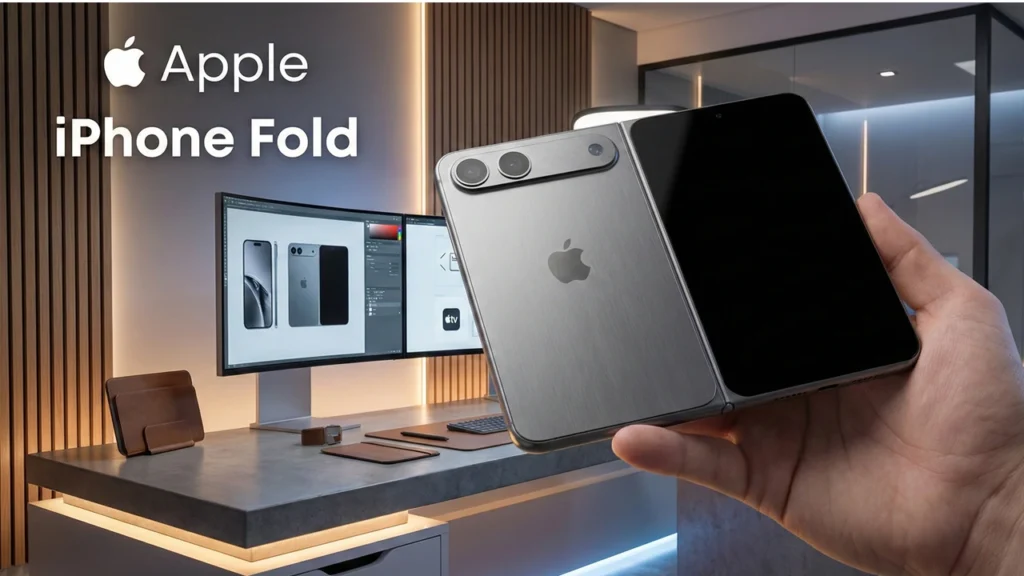
Explore the top innovations of Apple’s first foldable iPhone.
On the internet, new information on Apple’s first foldable iPhone has emerged.
Key design elements of the alleged iPhone Fold, which is expected to make its debut in September of this year, have now been leaked by a tipster.
On Weibo, Tipster Instant Digital asserted that the iPhone Fold will have volume controls on the upper-right corner, resembling the iPad mini’s design.
According to reports, Apple chose not to route cables across to the left edge and instead placed the motherboard on the right side.
In the meantime, the camera control button and the power button with built-in Touch ID are reported to be located on the device’s right edge.
The source goes on to say that there won’t be any buttons on the left side of the foldable.
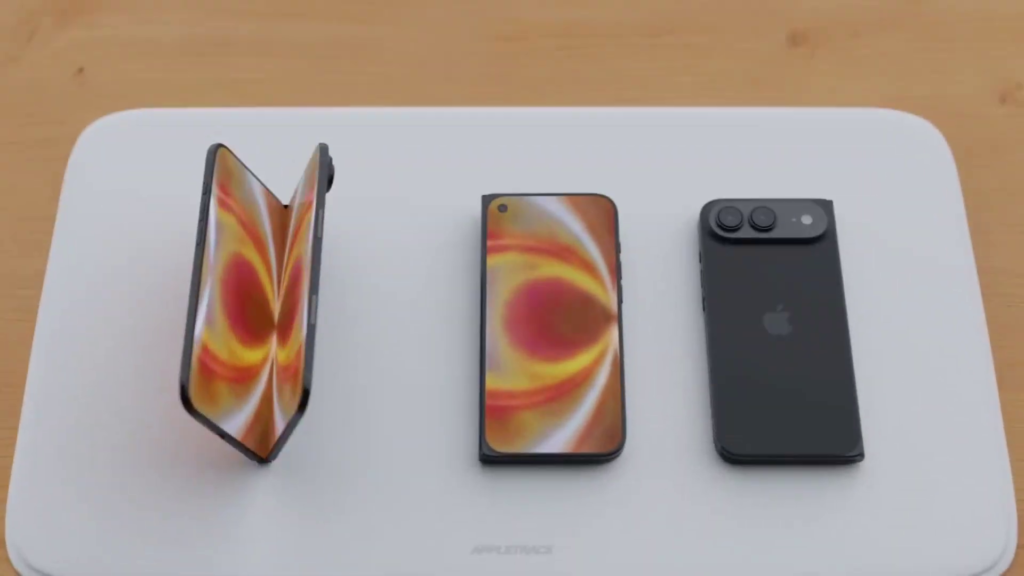
The iPhone Fold is anticipated to have a single punch-hole camera on the front for video chats and selfies.
According to reports, it will have a dual camera configuration on the back, contained in a camera plateau much like the iPhone Air, along with a microphone and an LED flash.
According to the tipster, the rear camera module will be completely black, which contrasts with the body color rather than matching it.
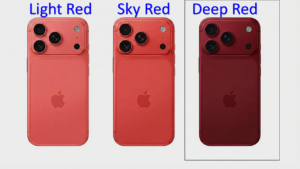
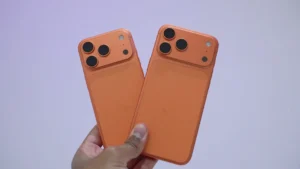
There will be two color options available when the iPhone Fold launches, one of which will be white.
According to reports, the inside of Apple’s foldable iPhone has a stacked architecture that creates room for the huge battery.
According to numerous reports and reliable sources, Apple is anticipated to release a new foldable iPhone this year.
Although there have been rumors of the long-awaited device for years, there are more and more indications that Apple will launch its first foldable device in 2026.
We’ve compiled an updated list of the most important features about Apple’s foldable iPhone that have been leaked thus far below.

According to reports, Apple will refer to the gadget as the “iPhone Fold,” a moniker that the media has already started using when discussing the product.
1. The overall layout.
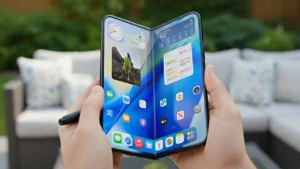
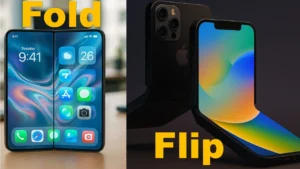
Mark Gurman of Bloomberg claims that rather than using the clamshell form of the Samsung Galaxy Z Flip, Apple’s foldable iPhone is more akin to Samsung’s Galaxy Z Fold, which folds like a book.
According to industry expert Ming-Chi Kuo, the foldable iPhone will be between 4.5 and 4.8 mm when unfolded and between 9 and 9.5 mm when folded. Instant Digital, a Weibo-based leaker, has revealed that the foldable iPhone will be at least 4.8 mm thick.
The leaker has also stated that the power button and camera control would remain on the right side of the device, as they have on previous recent iPhones, but the volume buttons will be on the top edge, aligned to the right, like on the iPad mini.
There are also rumors that the gadget has a camera plateau similar to the iPhone Air on the back left.
2. The screen.
Users will interact with a 5.5-inch outer display that resembles an iPhone screen when it is folded, and a larger 7.8-inch iPad-style screen will be visible when it is unfolded.
Two reliable sources have confirmed these dimensions. But according to a more recent story by The Information, the smartphone will have a 7.7-inch inside panel and a 5.3-inch front screen.
One report states that the outside display will have a resolution of 2,088 x 1,422, and the inner folding display will be roughly the size of an A6 piece of paper with a resolution of 2,713 x 1,920.
According to reports, Apple is testing a more durable display film technology for its foldable, which would utilize a transparent polyimide film as a protective layer over the incredibly thin glass.
3. Make yourself more visible.
Analyst Ming-Chi Kuo claims that Apple’s usage of a metal plate that can distribute and regulate the tension created by bending the display is the reason why the inside display is essentially crease-free.
According to reports, Apple uses liquid metal in the hinges to increase endurance and reduce screen creasing.
According to the expert, Apple has decided to use liquid metal, which is produced through a die-casting technique, to solve this prevalent problem with foldable smartphones.
According to the Chinese website UDN, which cites supply chain sources, Apple has resolved “the crease problem” that has beset the majority of foldable devices, and the iPhone will be the first foldable smartphone to hit the market without creases.
4. Chassis and Hinge.
According to analyst Ming-Chi Kuo, the foldable iPhone is said to include a titanium chassis and a hinge made of stainless steel and titanium.
A titanium alloy, which has been shown to be an effective option for Apple’s new ultra-thin iPhone Air, will be used in the frame itself to eliminate bending problems.
Analyst Jeff Pu, meanwhile, thinks Apple is employing titanium and aluminum, while Kuo thinks a combination of titanium and stainless steel has been selected.
5. Cameras.
According to Kuo, the foldable iPhone is anticipated to have a dual-lens rear camera with a front-facing camera for both folded and unfolded modes.
Mark Gurman of Bloomberg has confirmed reports that the gadget will have four cameras: two back cameras, one inside camera, and one front camera. According to prolific Weibo leaker Digital Chat Station, the dual back lenses will each have 48 megapixels.
According to other sources, the outside display, when the gadget is folded, will contain a punch-hole camera, while the inner display will have an under-screen camera (USC).
The camera on the exterior display will be in the upper-left corner of the screen, according to a more recent rumor from The Information.
6. Press ID.
In order to conserve valuable internal space, Kuo thinks the phone would forego Face ID identification in favor of a Touch ID side button.
Mark Gurman of Bloomberg also confirmed the claim. Touch ID has already been incorporated into the side button of the iPad, iPad Air, and iPad mini by Apple.
7. Cells with a high density.
According to reports, the smartphone has the largest battery ever found in an iPhone.
According to a Korean blog that has previously revealed correct information about unannounced goods, Apple is also focusing heavily on increasing power efficiency by reducing important components like the display driver to make place for additional battery cells.
High-density battery cells are said to be used in the phone. Anticipate the C2 modem to become more mmWave compatible in the US and to be quicker overall. There will probably be more advancements in electricity efficiency.
Read More.