IPhone hasn’t shipped a truly new iPhone form factor in ages, and the latest iPhone Fold leaks are starting to feel less like wishful thinking and more like a product that’s being lined up for launch.
Over the last couple of weeks, we’ve gotten a pile of details: an “exclusive” design mockup floating around accessory circles, reports about how Apple is tackling the crease, hints at fold-only multitasking features, and pricing rumors that are even higher than people were bracing for.
Let’s start with the big thing: the alleged final design of the iPhone Fold, and what it suggests about how Apple wants this device to fit into your life.
The alleged final design: short, wide, and surprisingly comfy
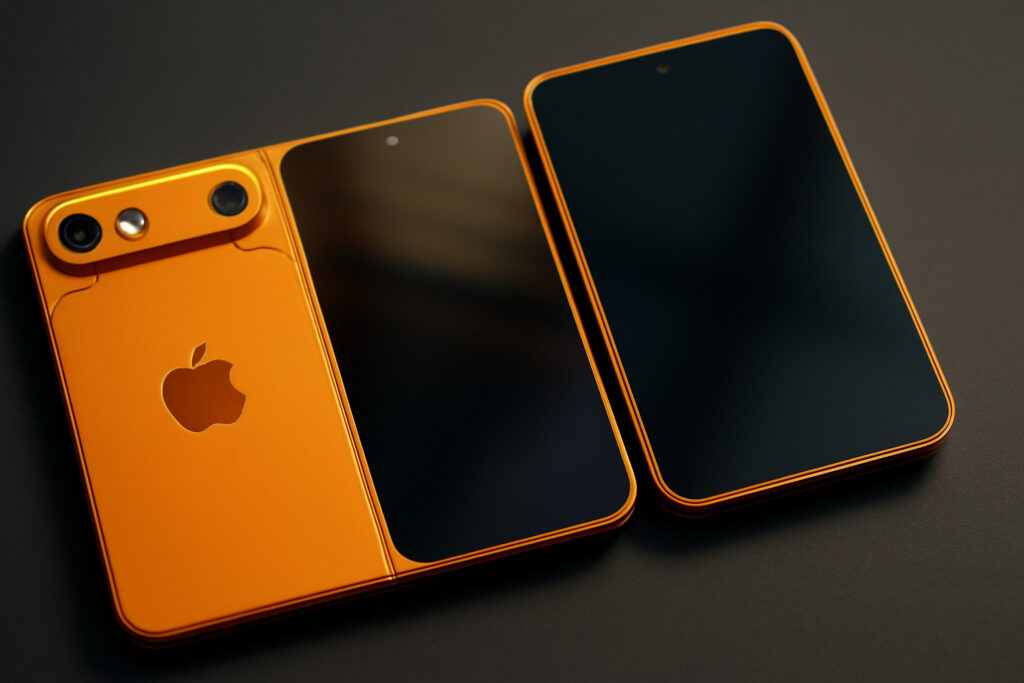
The most interesting part of the mockup isn’t the hinge or the cameras. It’s the shape.
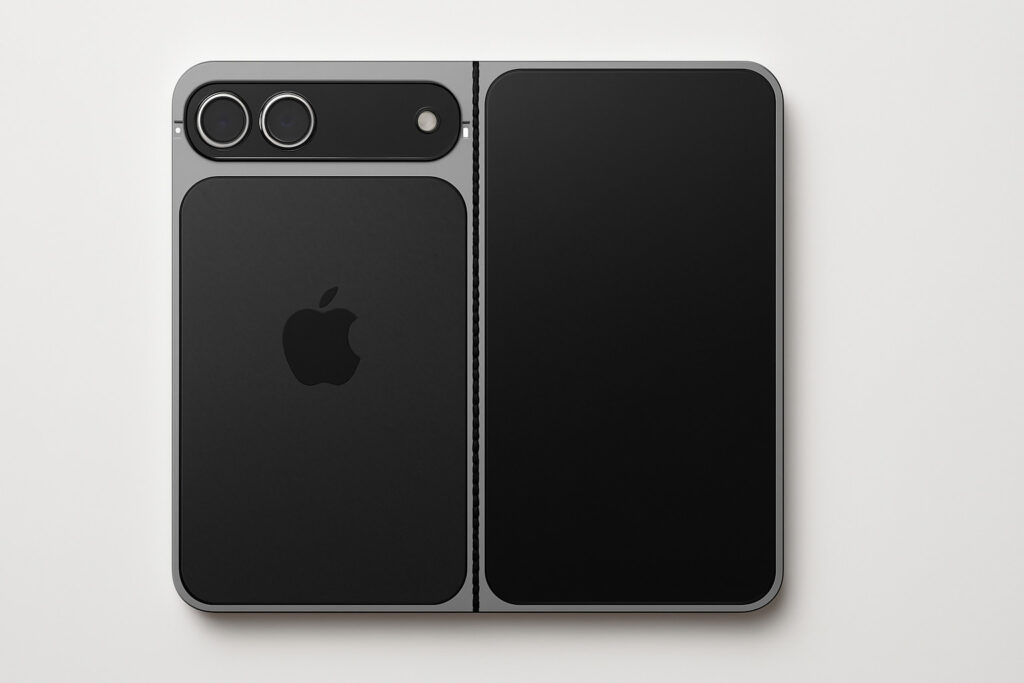
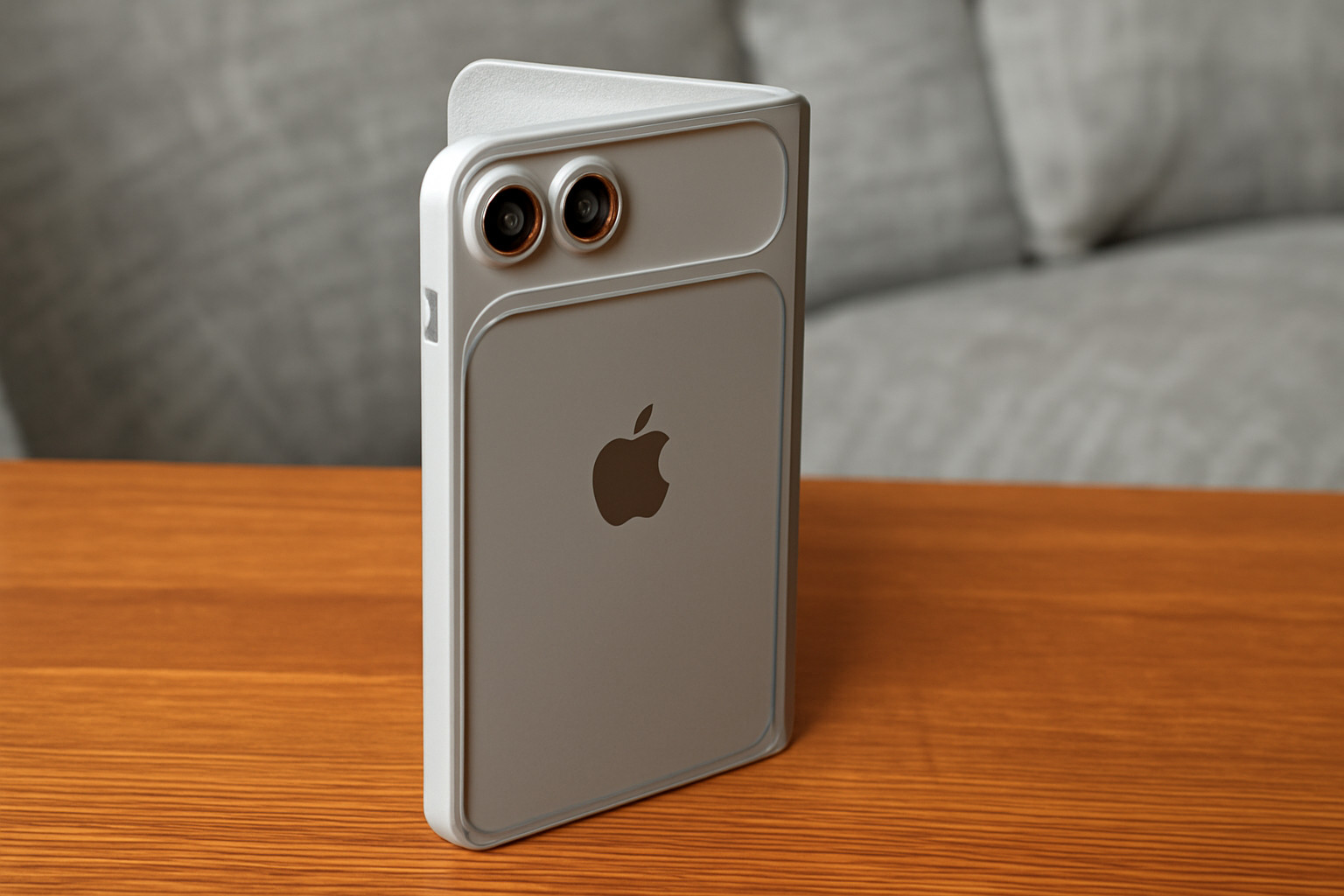
Multiple dummy units point to a form factor that’s short and wide. On paper, that sounds awkward. In the hand, it might be the opposite: the wider grip can feel stable, and the shorter height can make one-handed use more realistic than the tall candy-bar phones we’ve gotten used to.
The leak points to a 5.3-inch cover display on the outside, then a 7.8-inch internal display when you open it up. That inside number is the one that changes everything. 7.8 inches is flirting with iPad mini territory, which means reading, email triage, spreadsheets you don’t hate, and actual comfortable web browsing.
Bezels look fairly thin on the dummy, but there’s a bigger tell: you don’t see cutouts or layout hints for Face ID hardware like you do on other recent dummy units. That’s not a small omission. It’s a major direction change.
No Face ID: Touch ID returns, and the iPad influence is obvious
If the leaks are right, the iPhone Fold is skipping Face ID and going back to Touch ID, built into the power button on the right side, iPad-style. It’s a move that makes practical sense on a foldable: fewer sensor constraints on the front, fewer compromises around display cutouts, and a straightforward way to authenticate whether the device is open or closed.1
The iPad comparisons don’t stop there. Another detail that keeps popping up: the volume buttons appear to be moved to the top-right edge rather than the left side. Again, that’s familiar if you use an iPad mini.
One weird bit: some dummy units show no Action button and no ring/silent switch. If that holds, it would be a first for iPhone. Realistically, this might just be a dummy-unit gap (these are made to communicate dimensions, not necessarily every final control). Still, it’s worth watching, because Apple has been slowly nudging people away from physical audio toggles for years.
Around back, the mockup is almost boring: two cameras (wide and ultra-wide) sitting in the raised camera plateau introduced on the iPhone 17 line, if the leak language is accurate. The bigger eyebrow-raiser is what might be missing: a MagSafe ring. If Apple actually ships the Fold without MagSafe, that changes the accessory story a lot, from wallets to car mounts to charging stands.
The crease problem: why Apple waited, and what’s different now
The obvious question is why Apple is only jumping into foldables now, after years of Samsung, Google, and others iterating in public.
The best explanation is also the simplest: Apple doesn’t want to ship a foldable iPhone until it can look like a normal iPhone display, not a display with a permanent compromise down the middle.
The leak stack suggests Apple is attacking the crease with a three-part approach:
1. A liquid-metal hinge The hinge is rumored to use a liquid metal material engineered for repeated bending with precise, consistent movement. The point isn’t just durability. It’s controlled tension: keeping the folding motion uniform so the display isn’t stressed unevenly over time.
2. A “sandwiched” OLED with dual UTG layers Instead of relying on one ultra-thin glass layer, the claim is that Apple is using two UTG layers around the OLED. Bending multiple layers together can distribute stress better than a single layer taking the full load.
3. Optically Clear Adhesive (OCA) doing more than glue This is the sneaky one. Reports say Apple is using OCA as a kind of shock absorber that reduces tension concentration at the fold. Some claims go further: that the material can help fill microscopic irregularities that develop with use, helping the display stay visually consistent longer.
The long-term part matters. Plenty of foldables look decent in week one. Months later, many start telling the truth. If Apple really has a solution that holds up after thousands of folds and real-world wear, that’s the difference between “cool tech demo” and “normal phone you can trust.”
On timing: despite whispers about a delay into December, the newer chatter says Apple’s hiccups won’t meaningfully change launch timing, and that September is still the target, possibly alongside the iPhone 18 Pro line or extremely close after.
iOS 27 (Fold edition): real multitasking comes to iPhone
The hardware is only half the story. The leaks that actually make me pause are about software.
One report claims Apple is building a specialized version of iOS 27 for the iPhone Fold, with fold-exclusive multitasking features. The biggest rumored additions:
A left-side sidebar layout in many apps, similar to iPad app structure. This makes sense on a wider display because it keeps navigation persistent instead of hiding everything behind back buttons.
Two apps at once, side-by-side. iPhone users have asked for this forever. Apple has resisted because split view on a small phone can feel cramped and messy. On a 7.8-inch inside screen, it becomes usable, not just possible.
The aspect ratio is another quiet win. The Fold is rumored to lean toward a 4:3 iPad-like feel, which should reduce the “giant black bars” problem you see on many tall foldables when watching video. Wider device, less dead space, larger video box. It’s not magic, just better geometry.
One thing to keep expectations in check: don’t expect iPadOS on this. Leaks suggest it will still run iOS, with select iPad-inspired features rather than turning into a pocket iPad that runs pro desktop-class apps.
The rumored pricing: $2,300 to $2,900 and the Vision Pro vibes
Now the part that makes even excited people squint at their wallets.
A pricing leak suggests three storage tiers: 256GB at $2,300 512GB at $2,600 1TB at $2,900
If those numbers land anywhere near reality, Apple isn’t aiming for “mainstream premium.” This is an ultra-premium flex product, and it starts to feel a lot like Vision Pro strategy: solve hard problems, ship the best version, charge a mountain, and let the market decide how big the category gets.
The honest issue is simple: at $2,300, you’re competing with a laptop purchase. Multitasking on a phone is cool. A MacBook that does your actual work is cooler. Apple will need to sell not just a device, but a habit change: why you’d choose this instead of carrying a phone plus a computer (or phone plus iPad).
What to watch next before the expected September launch
If you’re following this like a normal tech person (equal parts curious and skeptical), here’s what actually matters in the next wave of leaks:
Whether MagSafe is really gone, or just missing from early dummies Whether Apple Pencil support shows up in any credible reports (this would instantly make the big screen more than a novelty) Whether iOS multitasking is truly fold-exclusive, or the start of a broader iPhone change Real-world thickness and weight, because foldables live or die on comfort And whether the crease claims hold up when independent reviewers shine harsh light at bad angles (because they will)
Also, yes, there’s that side-thread: the claim that Tim Cook is no longer Apple’s CEO, with John Ternus stepping in. That’s enormous news if true, but it’s also the kind of thing that tends to get misreported or misunderstood fast. It deserves its own careful breakdown once there’s solid confirmation.
Conclusion
If the iPhone Fold leaks are even mostly accurate, Apple’s first foldable won’t be a “me too” entry. It’ll be Apple doing what Apple usually does: show up late, bring a more polished version of the idea, and then charge enough money to make you question your life choices.
The design sounds more practical than it looks on paper, the Touch ID choice is logical, and the crease-fighting engineering is the clearest explanation for why Apple waited. The software is the real make-or-break. If iOS on a foldable finally delivers multitasking that feels natural, the iPhone Fold could become a genuine new category inside the iPhone line.
The price, though, is the looming problem. If it really starts at $2,300, Apple has to prove this isn’t just a fancy phone that folds. It has to feel like a device you’d reach for every day, for things you can’t do as comfortably on a normal iPhone. That’s the bar. And if Apple clears it, the rest of the industry is going to have a very long year.
Read MORE!
iPhone 18 Rumors: 12GB RAM for All Models, Battery Boost for Pro