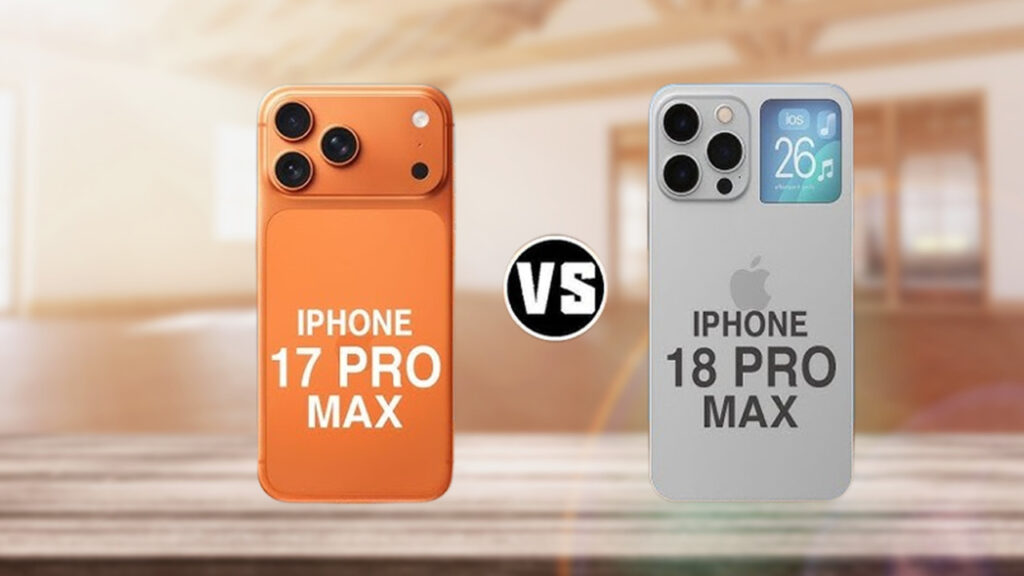
Apple’s iPhone 18 Pro Max is shaping up to be a refinement year, not a reinvention. As of a May 2026 update, multiple industry reports continue to point to a next-generation A20 Pro chip built on a2nm-class process, with efficiency and thermals as the story to watch.
For iPhone 17 Pro Max owners, that framing matters. If the rumors hold, the iPhone 18 Pro Max won’t look dramatically different across the room, but it may feel more during demanding use: long gaming sessions, extended 4K video recording, editing, navigation, and on-device AI tasks.
Design and Display: Familiar size, tighter finishing.
Early chatter suggests Apple will stick with its established 6.9-inch Pro Max approach and the current triple-camera platform layout. The more interesting detail is finish quality.
Reports from Bloomberg and industry analysts indicate Apple may improve rear glass integration, aiming for a smoother transition between the glass back and the titanium frame. That targets a small but real complaint on recent Pro models: subtle inconsistencies where materials meet. If true, the “new” feeling could come from better tolerances and a more seamless build rather than a new silhouette.
Performance and Efficiency: A20 Pro points to sustained speed.
The headline rumor is the A20 Pro, potentially moving to a 2nm-class manufacturing process. Compared with the A19 Pro expected in the 17 Pro Max, the biggest real-world gains may show up less in quick app launches and more in long-duration workloads.
If Apple pairs better chip efficiency with improved thermal management, the 18 Pro Max could run cooler and hold performance longer without throttling. That matters most for people who routinely push their phones: high-refresh gaming, prolonged camera use, exporting video, or AI-heavy features that keep the processor working continuously.
For many everyday users, day-to-day speed may feel similar. The difference would be consistency under stress.
Battery and Charging: Small capacity bump, bigger stability win.
Battery rumors point to a practical tradeoff: more internal space, possibly via a slightly thicker device. The iPhone 17 Pro Max is currently around 221 grams; early projections suggest the iPhone 18 Pro Max could land closer to 230–240 grams depending on final configuration.
That extra room could support a battery increase from an estimated 4,800 mAh class to roughly 5,000–5,200 mAh. That’s about a 5–10% bump on paper. Combined with improved efficiency, the more meaningful benefit may be steadier battery behavior across long sessions and long charging cycles, not necessarily a night-and-day jump in screen-on time.
Should you upgrade from the 17 Pro Max?
Upgrade or wait for iPhone 18 Pro Max if you want Apple’s newest Pro Max during the 2026 flagship cycle, you regularly game or record and edit video, or you care about lower heat buildup and stronger sustained performance. It also makes sense if you plan to keep your next iPhone for several years and want the newest chip architecture.
Stick with, or buy, the 17 Pro Max if your daily use is mostly messaging, browsing, social apps, photos, and streaming. It should remain a better-value flagship once the 18-series lands, and you may not benefit much from the efficiency and thermal improvements the iPhone 18 Pro Max is expected to prioritize.
Conclusion.
Based on current May 2026 reporting, iPhone 18 Pro Max vs iPhone 17 Pro Max looks like a decision about endurance, not excitement. If you regularly hit performance limits or want the most consistent battery-and-heat behavior over long sessions, the iPhone 18 Pro Max is the model to watch. If your iPhone use is lighter and your 17 Pro Max already feels fast and reliable, waiting is the practical move.
Read More!