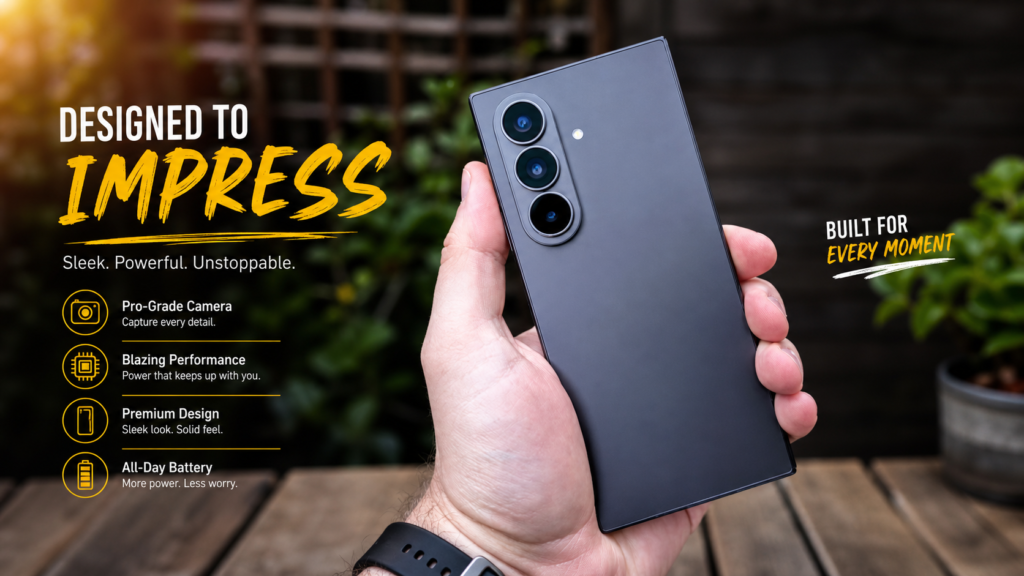

For years, purchasing a foldable smartphone required an unspoken trade-off. Enthusiasts paid premium prices—often near $2,000—for the futuristic delight of opening a phone into a tablet. Yet, in exchange for that bending display, users accepted compromises: mid-tier camera hardware, thermal throttling, and software that often felt like a stretched-out mobile OS rather than a desktop replacement.
As expectations mount for the next generation of book-style foldables, the upcoming Samsung Galaxy Z Fold 9 stands at a critical juncture. The era of novel form factors is over; foldables are now judged on pure performance, photographic excellence, and true utility. Early industry leaks and market shifts suggest Samsung is preparing a decisive leap forward—one that addresses long-standing compromises while facing new economic and competitive realities.
Here is an in-depth breakdown of the four major pillars defining the future of the Samsung Galaxy Z Fold 9.
1. The Camera Arms Race: Eliminating the “Foldable Camera Tax”
For generations, the phrase “foldable camera tax” was a reality for power users. While the Galaxy S Ultra series boasted periscope zoom lenses and massive high-resolution primary sensors, the Z Fold line lagged behind, burdened by strict internal space constraints and thermal envelopes.
With rival manufacturers pushing paper-thin profiles equipped with flagship sensors, Samsung can no longer afford to treat the Z Fold series as a second-class photographic citizen.
Historical Compromise vs. Expected Z Fold 9 Shift:

Previous Z Fold Generations:
[ 50MP Main Sensor ] + [ Basic 3x Telephoto ] + [ Form-Factor Priority ]
                       ↓
Galaxy Z Fold 9 (Rumored):
[ 200MP ISOCELL HP6 ] + [ Advanced Telephoto ] + [ Zero Compromise Flagships ]
The 200MP ISOCELL HP6 Upgrade
The most persistent rumors surrounding the Z Fold 9 point toward a massive hardware overhaul led by a custom 200MP ISOCELL HP6 main camera sensor. Moving past the 50MP sensors of prior generations, this shift signifies Samsung’s commitment to delivering true parity with its traditional slab flagships.
- Deep Pixel Binning: By utilizing advanced 16-in-1 pixel binning technology, the ISOCELL HP6 can capture bright, detailed 12.5MP photos in low-light environments while maintaining the ability to capture massive 200MP full-resolution shots when lighting allows.
- Re-engineered Optical Stack: To fit a sensor of this scale into a folding chassis without creating an ungainly camera bump, Samsung is expected to utilize advanced high-refractive glass elements and redesigned sensor housing.
- Enhanced Telephoto & ISP Integration: Alongside the main sensor upgrade, the Z Fold 9 is slating improvements for its telephoto system. Backed by next-generation Image Signal Processor (ISP) algorithms baked into late-model silicon, computational photography will bridge the gap for low-light portraiture and high-magnification clarity.
By bringing Ultra-tier imaging to its flagship foldable, Samsung aims to completely dismantle the argument that choosing a folding screen means accepting a lesser camera.
2. The Price Shock: Will High-Density Components Push Pricing Past $2,200?
While hardware upgrades generate enthusiasm, supply chain realities present a stark challenge for consumers. The tech industry is currently navigating a severe hardware cost inflation cycle, driven largely by the massive surge in artificial intelligence infrastructure demands.
Component Inflation Breakdown:
• Enterprise AI Boom  ──>  DRAM & High-Density Storage Scarcity
• Advanced Silicon   ──>  Rising Wafer Costs (3nm/2nm Process Nodes)
• Result             ──>  Unprecedented Production Cost Pressures
Supply Chain Pressures and Market Realities
The component pricing landscape has shifted drastically:
- High-Density Memory Scarcity: Semiconductor fabrication plants are reallocating production capacity toward High Bandwidth Memory (HBM) and enterprise-grade storage required for AI data centers. Consequently, consumer-grade high-density LPDDR5X RAM and UFS 4.0 storage prices have climbed.
- Cutting-Edge Processors: Running local AI workloads natively requires silicon fabricated on advanced 3nm or sub-3nm nodes, which carry higher wafer costs than previous architectures.
- Exotic Hinge and Display Materials: Thinner profile requirements necessitate custom titanium alloys, advanced carbon-fiber support plates, and flexible ultra-thin glass (UTG) solutions, driving bill-of-materials (BOM) costs higher.
The Pricing Dilemma
Historically, the Z Fold line has hovered between $1,799 and $1,899. However, rising component costs raise a serious question: Will Samsung cross the $2,000 to $2,200 threshold for base models?
Crossing the $2,000 boundary represents a significant psychological barrier for mainstream consumers. While tech enthusiasts might justify a $2,200 device if it replaces a laptop, phone, and tablet simultaneously, pushing prices higher risks narrowing the foldable market back down to a niche luxury audience. Samsung must navigate this delicate balance between maintaining profit margins and expanding its market footprint.
3. Maturing “Agentic” AI & One UI Evolution: Sci-Fi Multitasking Realized
Early software attempts at mobile artificial intelligence focused on localized tasks: summarizing text, editing photo backgrounds, or translating phone calls in real time. While useful, these features were largely reactive.
The Galaxy Z Fold 9 is poised to spearhead the transition toward Agentic AI—software that proactively understands intent, executes multi-step workflows across multiple applications, and operates natively without constant user prompts.
Beyond Static Generative Tools
The large canvas of an unfolded Z Fold device provides an ideal hardware layout for agentic workflows. Instead of manually switching between three separate apps to accomplish a task, next-generation One UI features leverage local, on-device neural processing units (NPUs) to handle complex cross-application management.
Practical Agentic Workflows on a Folding Canvas:
- Automated Research & Synthesis: A user can highlight an event invite in a messaging app on one half of the screen. The AI agent can automatically check calendar availability, search for directions in a mapping service, calculate commute times, draft a response, and queue a ride-share app—executing these steps simultaneously across a split-screen interface.
- Dynamic Context Awareness: While working in a document on the main display, One UI’s agentic system can monitor background context, pulling up relevant spreadsheets, imagery, or email threads in an adjacent window without manual searching.
- Autonomous Content Formatting: Users can record a voice memo while taking handwritten notes with an S Pen; the agentic AI can transcribe the audio, align it with the handwritten timestamps, structure the content into a formatted slide presentation, and stage it for export.
+-----------------------------------------------------------------+
|                       Z FOLD 9 MAIN SCREEN                      |
| +-----------------------------+ +-----------------------------+ |
| |          WINDOW 1           | |          WINDOW 2           | |
| |   Live Context / Video      | | Dynamic Document/Data Sheet | |
| |   Conference Session        | | Automatically Populated     | |
| +-----------------------------+ +-----------------------------+ |
| +-------------------------------------------------------------+ |
| |                      AGENTIC AI LAYER                       | |
| | Cross-references notes, schedules calendar, drafts summary | |
| +-------------------------------------------------------------+ |
+-----------------------------------------------------------------+
Standard bar-style phones lack the display real estate to present these multi-step autonomous actions visually. The Z Fold 9 uses its wide display to make complex, multi-app background tasks transparent and actionable in real time.
4. Multi-Foldable Family Pressure: Facing the Tri-Fold and Internal Rivalry
For years, the Z Fold was Samsung’s sole flagship folding form factor. Today, the competitive landscape is far more complex—not only from external rivals pushing ultra-slim profiles and tri-fold form factors, but also from Samsung’s own expanding portfolio.
The Threat of Internal Cannibalization
Industry reports suggest Samsung is continuing to diversify its flexible display portfolio, considering Ultra variants of its existing line alongside commercial tri-fold concepts that expand into full 10-inch desktop environments.
This presents a distinct positioning challenge for the standard Galaxy Z Fold 9:
                  Samsung Flexible Ecosystem
                             │
     ┌───────────────────────┼───────────────────────┐
     ▼                       ▼                       ▼
Z Fold Ultra            Z Fold 9                Tri-Fold Category
• Ultra-thin chassis    • Balanced flagship     • Dual-hinge workspace
• Max camera stack      • Standard form factor  • 10-inch full tablet
• Highest price point   • Mainstream buyer      • Ultra-premium niche
- The “Middle Child” Risk: If Samsung launches an even higher-tier “Z Fold Ultra” alongside a futuristic tri-fold, the standard Z Fold 9 risks losing its status as the absolute bleeding-edge tech device.
- The Price vs. Portability Dilemma: Buyers will need to evaluate whether to choose the traditional book-style fold (Z Fold 9), an ultra-slim variant optimized for pocketability, or a multi-folding display designed for maximum screen real estate.
Defining the Z Fold 9’s Identity
To remain the core choice for power users, the Z Fold 9 must position itself as the ideal balance between durability, capability, and ergonomic comfort. While tri-fold devices introduce extra hinge complexity and weight, the dual-panel Z Fold 9 remains the sweet spot for one-handed outer screen use paired with single-handed inner screen holding. Samsung’s success will hinge on convincing consumers that the standard fold offers the most practical blend of versatility and long-term reliability.
Summary: A Pivotal Turning Point for Foldables
The Samsung Galaxy Z Fold 9 represents more than an annual hardware iteration; it marks a major shift for the category as a whole.
- Camera Equality: By introducing a rumored 200MP ISOCELL HP6 sensor, Samsung aims to eliminate the hardware performance gap between folding phones and conventional slab flagships.
- Economic Realities: Global semiconductor demands and AI hardware investment threaten to push pricing into unprecedented territory, making value proposition a central debate.
- True Agentic Productivity: Software is evolving from simple photo tricks to full, multi-app autonomous workflows that leverage large flexible displays.
- Portfolio Strategy: As alternative form factors like tri-folds emerge, the Z Fold 9 must solidify its position as the reliable, high-performance center of the foldable market.
If Samsung successfully balances these factors, the Galaxy Z Fold 9 could establish the definitive standard for modern, work-ready smartphones—finally moving foldables from a novel hardware alternative to the undisputed peak of mobile productivity.