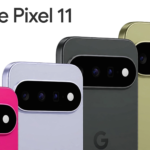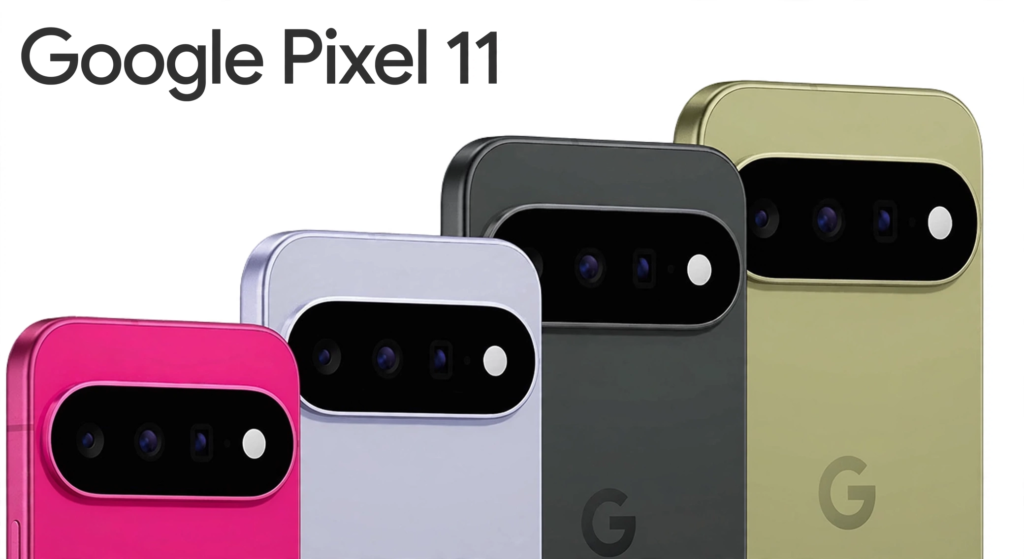

Imagine holding a device that not only captures life’s moments with stunning clarity but also learns your habits to make every interaction smoother. That is the promise swirling around the upcoming Google Pixel 11, the next iteration in Google’s acclaimed smartphone line. In this article we explore what rumors, leaks, and industry trends suggest about its design, camera, performance, and overall value.
- The Google Pixel 11 is expected to feature a refined aluminum frame with a matte finish for improved grip.
- Advancements in the under‑display camera could deliver a true edge‑to‑edge OLED panel.
- Google’s new Tensor G4 chip promises a 30% boost in AI processing over its predecessor.
- Camera upgrades include a 50 MP main sensor with enhanced night‑sight and a periscope telephoto lens.
- Battery life targets a full‑day usage with 45 W wired and 23 W wireless charging.
- Price is projected to start at $899, positioning it competitively against the iPhone 16 Pro and Galaxy S25.
Design and Build Quality
The Google Pixel 11 is rumored to adopt a unibody aerospace‑grade aluminum chassis, which not only feels premium but also adds structural rigidity. Furthermore, the matte back coating reduces fingerprints, a common complaint with previous Pixel models. Consequently, the device may weigh around 185 grams, striking a balance between sturdiness and comfort. In addition, the corners are expected to be slightly rounded, improving one‑handed usability.
Display Technology Advancements
Leaks suggest a 6.3‑inch LTPO OLED screen with a 120 Hz adaptive refresh rate, enabling smoother scrolling while conserving battery. Moreover, the under‑display front camera could finally eliminate the notch, delivering a truly immersive viewing experience. As a result, peak brightness might reach 2,200 nits, making outdoor readability exceptional. Similarly, HDR10+ support promises richer colors for streaming content.
Camera System Innovations
Google’s Pixel line has always shone in photography, and the Pixel 11 appears set to raise the bar further. The primary sensor is rumored to be a 50 MP Samsung GN2 with larger pixels, which should improve low‑light performance significantly. Furthermore, a new periscope telephoto lens could offer 5× optical zoom without sacrificing image quality. Consequently, users may enjoy sharper distant subjects and more versatile framing options. In addition, software enhancements like Real Tone 2.0 aim to render skin tones more authentically across diverse lighting conditions.
Performance and Chipset Expectations
At the heart of the Pixel 11 lies the anticipated Tensor G4 chip, built on a 4 nm process for improved efficiency. Furthermore, Google claims the new NPU will deliver up to 30 % faster AI tasks, such as live translation and on‑device photo editing. As a result, everyday apps should launch quicker, and multitasking will feel smoother. Similarly, the Adreno 750 GPU is expected to handle graphics‑intensive games with minimal thermal throttling.
Software Experience and Android 15 Integration
The Pixel 11 will likely ship with Android 15 out of the box, offering the latest privacy controls and material you design tweaks. Furthermore, Google’s exclusive features like Call Screen, Hold for Me, and Live Caption are expected to receive refinements that leverage the Tensor G4’s AI power. Consequently, users may notice more accurate spam detection and faster transcription. In addition, monthly security patches are promised for at least five years, reinforcing the device’s long‑term value.
Battery Life and Charging Solutions
Battery capacity is rumored to increase to 4,800 mAh, which, combined with the Tensor G4’s efficiency, should provide a full day of heavy usage. Furthermore, Google may introduce 45 W wired charging, capable of replenishing 50 % in roughly 20 minutes. As a result, top‑up times during short breaks become far less disruptive. Similarly, 23 W wireless charging and reverse wireless charging for accessories are expected to return, adding convenience for ecosystem users.
Connectivity and 5G Prospects
The Pixel 11 is likely to support sub‑6 GHz and mmWave 5G bands, ensuring compatibility with carriers worldwide. Furthermore, Wi‑Fi 7 readiness could future‑proof the device for faster home and office networks. Consequently, download speeds may surpass 2 Gbps in optimal conditions, benefiting cloud gaming and large file transfers. In addition, Ultra‑Wideband (UWB) support is rumored, enabling precise location‑based features like digital car keys and secure file sharing.
Price Point and Market Positioning
Analysts predict a starting price of $899 for the base 128 GB model, placing it directly against the iPhone 16 Pro and Samsung Galaxy S25. Furthermore, higher storage variants (256 GB and 512 GB) may see $100 increments, offering flexibility for power users. As a result, Google aims to attract both flagship seekers and those who value the Pixel’s software advantages. Similarly, trade‑in offers and carrier discounts could lower the effective cost, widening its appeal.
Potential Drawbacks and Considerations
While the leaks are exciting, some concerns merit attention. Firstly, the reliance on a single supplier for the periscope lens could lead to supply constraints, affecting launch availability. Furthermore, the absence of a dedicated microSD slot may disappoint users who prefer expandable storage. Consequently, buyers must weigh internal storage options carefully before purchasing. In addition, the device’s thickness might increase slightly to accommodate the larger battery, which could affect pocketability for some.
Comparison with Competitors
When stacked against the iPhone 16 Pro, the Pixel 11 may offer superior computational photography thanks to Google’s AI expertise. Furthermore, Android’s customization options provide a more flexible user interface compared to iOS’s locked‑down environment. As a result, users who prioritize camera software and widget flexibility might lean toward Pixel. Similarly, compared to the Galaxy S25, the Pixel may deliver a cleaner software experience with fewer pre‑installed apps, although Samsung’s hardware often leads in display brightness and charging speed.
Final Verdict: Should You Wait for the Google Pixel 11?
If you value a pure Android experience, industry‑leading camera software, and timely updates, the Google Pixel 11 appears poised to be a compelling choice. Furthermore, its anticipated hardware upgrades address many criticisms of previous Pixel generations, such as battery life and zoom capability. Consequently, waiting a few months for the official launch could reward you with a device that balances innovation and reliability. In contrast, if you need a phone immediately and prioritize raw performance or ecosystem accessories, exploring current flagships might be prudent.
What is the expected release date for the Google Pixel 11?
Based on historical release patterns and recent supply chain leaks, the Google Pixel 11 is anticipated to debut in early October 2025, likely coinciding with Google’s annual fall hardware event.
Will the Google Pixel 11 support satellite connectivity?
While no official confirmation exists, several industry analysts suggest that Google may experiment with emergency satellite messaging in a future Pixel variant, but the standard Pixel 11 model is expected to rely solely on terrestrial 5G networks.
How does the Google Pixel 11’s camera compare to the Pixel 8 Pro?
The Pixel 11 is rumored to feature a larger main sensor, an upgraded periscope telephoto lens, and improved computational photography algorithms, which together should deliver noticeably better low‑light performance and zoom versatility compared to the Pixel 8 Pro.
Is the Google Pixel 11 expected to have a headphone jack?
No, the Pixel series has omitted the headphone jack since the Pixel 2, and all indicators point to the Pixel 11 continuing this trend, relying on USB‑C audio or wireless Bluetooth solutions.
What security updates will the Google Pixel 11 receive?
Google promises at least five years of monthly security patches for the Pixel 11, matching the commitment made for recent Pixel flagship devices and ensuring long‑term protection against vulnerabilities.