Samsung, Apple, and Google keep trading the same headline features: brighter cameras, smarter AI, thinner bezels. Useful? Sure. Exciting? Less and less.
Meanwhile, out on the edges where “weird” phones are allowed to exist, RedMagic has been quietly building something that feels genuinely forward-looking: capacitive trigger buttons, flush with the frame, mapped to anything on screen. The RedMagic 11 Pro and 11 Air treat physical input like it still matters.
Samsung should steal that idea for the Galaxy S27 Ultra. Not as a gamer-only gimmick, but as a practical, grown-up feature that makes the phone feel different from the iPhone-shaped gravity well Samsung keeps orbiting.
RedMagic’s “niche” triggers are the future hiding in plain sight
If you’ve never used triggers on a phone, it’s easy to dismiss them as “for gaming people.” But the RedMagic approach is more thoughtful than the typical loud gamer design.
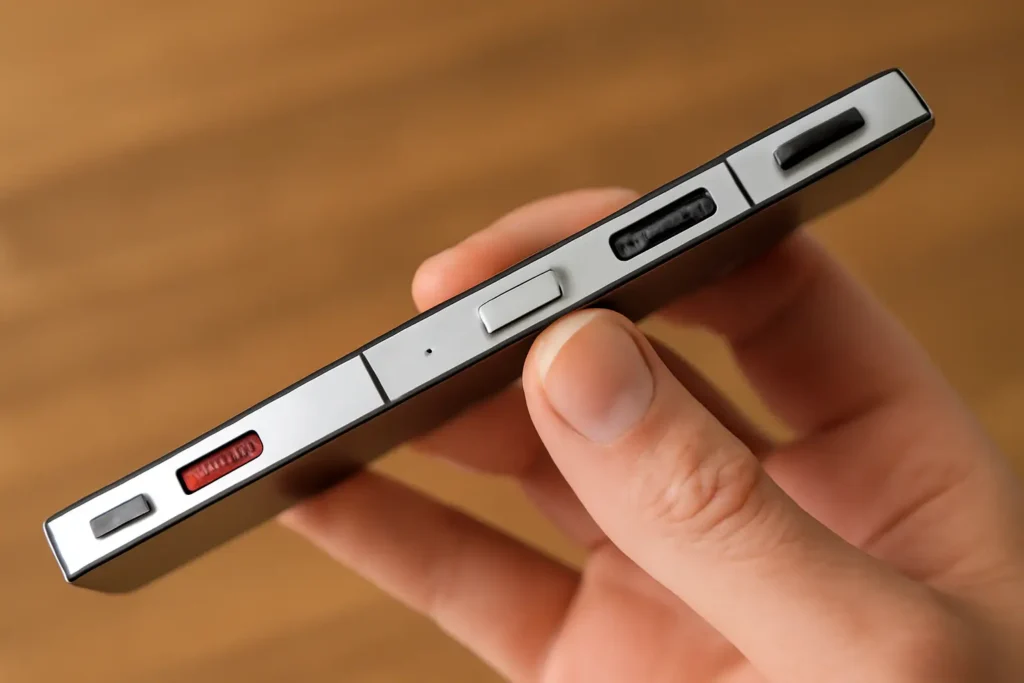
On the RedMagic 11 Air, the triggers are almost invisible. They sit flush, blend into the chassis, and don’t turn the phone into a toy. Then you rotate into landscape, put your index fingers where they naturally land, and suddenly you’ve got controller-style inputs that don’t block the screen.
The key is the software. RedMagic lets you map those touch-sensitive zones to any on-screen element. That means you’re not limited to whatever control layout a game shipped with. You can assign left trigger to aim, right trigger to shoot, or place them on two awkward virtual buttons you’re tired of missing during tense moments.
And this is exactly why the “niche” label doesn’t hold up anymore. Mobile gaming has grown up. People play Call of Duty Mobile, PUBG, Genshin Impact, Fortnite, racing games, fighting games, and they take it seriously. More importantly, Android is turning into a weirdly capable handheld PC alternative: emulators are better than ever, and Winlator-style compatibility layers are making heavier games playable with enough horsepower.
Once you’ve tried shooters or racers with real trigger inputs, going back to glass-only controls feels like wearing mittens.
Samsung’s Apple chase is costing it personality
Samsung isn’t failing because it makes bad phones. The Ultra line is packed with expensive, impressive hardware. The problem is strategic: the Galaxy S lineup has spent years trying to be the best all-around phone for everyone.
That sounds smart until you remember there’s already a king of “the phone most people buy because it’s safe and polished.” Apple owns that hill, and Apple is not moving.
Samsung’s advantage used to be something else: power-user appeal. The people who wanted options. The people who cared about specs, customization, multitasking, and doing more with a slab of glass than checking messages and taking portraits.
That crowd still exists, and it’s not small. Mobile gaming alone is massive, and it’s no longer just casual time-killers. Yet Samsung’s “gamer-friendly” moves have mostly been under-the-hood: exclusive Snapdragon for Galaxy tuning, better vapor chamber cooling, high refresh rate displays that look incredible in motion.
Those are real investments. But Samsung keeps stopping one step short of making a clear statement.
Apple, for its part, made a very Apple decision with the iPhone 16 series: Camera Control. It’s a physical feature aimed at a specific audience (people who love taking photos), and it signals confidence. Samsung needs that kind of confidence again, but aimed at a different group.
How the S27 Ultra could make triggers feel mainstream
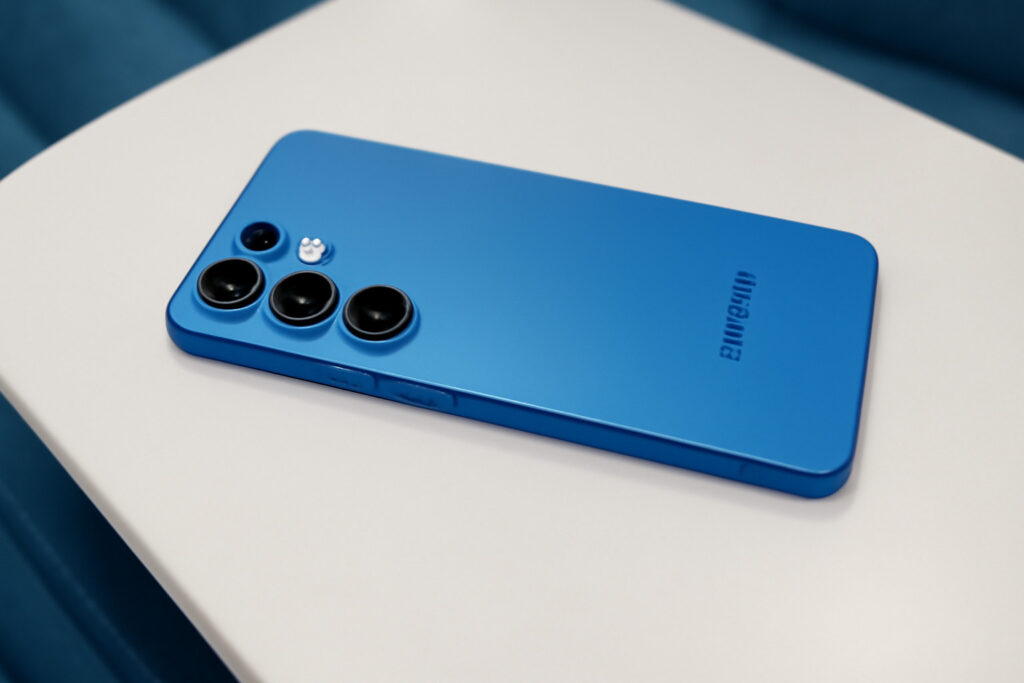
The rumors around the Galaxy S27 Ultra sound like the usual flagship escalation: a custom Snapdragon 8 Elite Gen 6 Pro on 2nm, camera upgrades, possibly variable aperture returning, a new ISOCELL sensor with LOFIC for better dynamic range, maybe a larger battery. Great. Also: not exactly a personality.
Here’s what’s funny: with that kind of silicon, the S27 Ultra will be a gaming monster whether Samsung talks about gaming or not. The only question is whether Samsung will acknowledge what it’s already building and add one small piece of hardware that changes how the phone feels day to day.
Discreet capacitive triggers would do that.
And they don’t have to be “gaming-only.” Samsung could let users map them system-wide: – Camera shutter and focus control in landscape – Scroll, back, or app shortcuts for one-handed use – Media controls while watching video – Gaming triggers with per-game profiles in Game Booster
The design challenge is real, but RedMagic already showed the core lesson: don’t make it ugly. Make it invisible until it’s useful.
If Samsung pulled this off with its usual build quality, haptics, and software polish, it could turn the S27 Ultra into something rare: a mainstream flagship that still has an enthusiast heartbeat.
The supply-chain twist: BOE, pressure, and a chance to pivot
There’s another thread in the S27 story that says a lot about where Samsung’s head is at: displays.
Samsung Display has effectively owned Galaxy OLED supply for years. The grip has been so tight it’s basically a monopoly inside Samsung’s own ecosystem. But the economics are shifting, and the reports are getting louder: Chinese panel makers want in, and Samsung Electronics wants cheaper panels for the Galaxy S line.
Industry chatter keeps pointing at BOE circling the flagship supply chain again, while CSOT has already found a path through models like the Galaxy A57. According to recent OLED shipment reporting (via Korean ZDNet and SigmaIntel), Chinese makers are actively pushing for Galaxy S supply, especially for the standard models.
That creates a pressure cooker. Samsung Electronics wants margin relief. Samsung Display wants to protect dominance, because losing “Galaxy exclusivity” isn’t just about money; it’s about prestige and leverage across the entire phone industry.
If Samsung is already being forced to rethink sacred internal habits like display sourcing, it’s the perfect time to rethink product identity too. Because if the S27 generation ends up feeling like “another careful iteration,” cheaper panels won’t be the thing people remember. They’ll remember that Samsung played it safe again.
Conclusion
Samsung doesn’t need to turn the Galaxy S27 Ultra into a neon gaming brick. It just needs one smart, physical feature that signals it’s willing to build for people who actually use their phones hard.
RedMagic’s flush capacitive triggers are exactly that: subtle, practical, customizable, and increasingly relevant as Android gaming and PC-class play expand. Apple picked a niche and backed it with hardware. Samsung can do the same, for gamers and power users who miss when Galaxy phones felt a little daring.
The S27 Ultra has plenty of jobs, technically. But culturally, it has one big job: stop chasing Apple’s idea of a flagship and start shipping Samsung’s. Triggers would be a great place to start.
Read More!