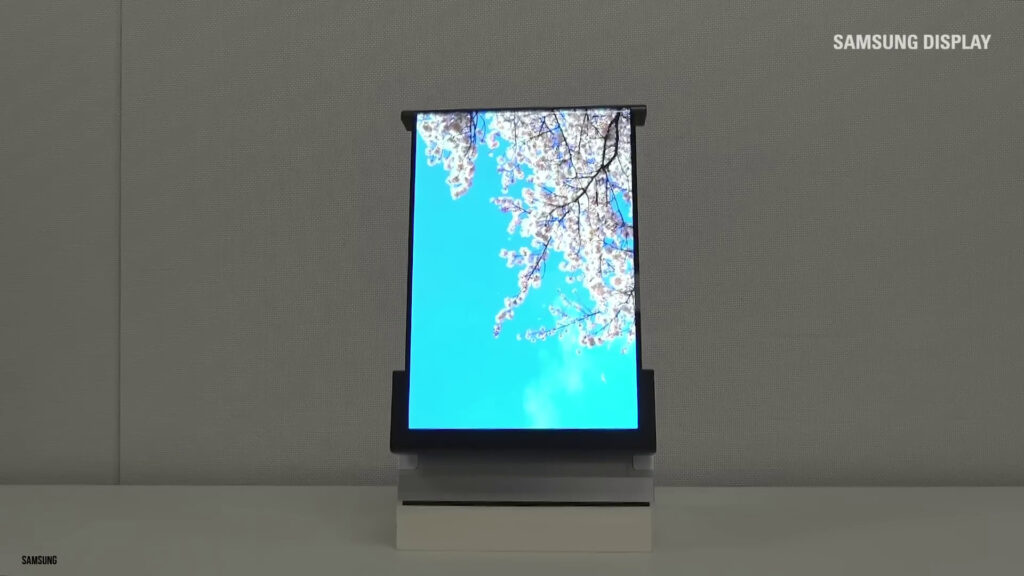
Samsung’s foldables are no longer an experiment, but the company’s next display bet may be even more ambitious. A day after Samsung shared a demo video highlighting display advances and showing a rollable concept unit, a fresh clue surfaced in Europe: a newly granted EUIPO trademark for the name “Z Roll.”
Concept hardware doesn’t always become a retail product, yet brand work tends to happen closer to commercialization than a flashy prototype. The filing also suggests S Pen support, adding weight to the idea that Samsung is thinking about a rollable not just as a novelty, but as a productivity device that sits near the Galaxy Z family.
The trademark that reignited the rollable talk
The most direct signal is the Z Roll name itself. Samsung’s “Z” branding is already associated with the Fold and Flip lines, so attaching Z to a rollable implies a plan to place it inside the same premium, experimental-but-shipping category. A trademark is not a launch date, but it is a commitment to a product identity: packaging, marketing language, and an ecosystem story.
The most intriguing detail is S Pen support. That matters because it changes the expected use case. A rollable phone that expands into a mini tablet becomes far more compelling if it can handle handwriting, sketching, and precise selection. For Samsung, that also fits a familiar playbook: turn new form factors into productivity platforms, then scale software and accessories around them.
What patents suggest about Samsung’s roll-out design
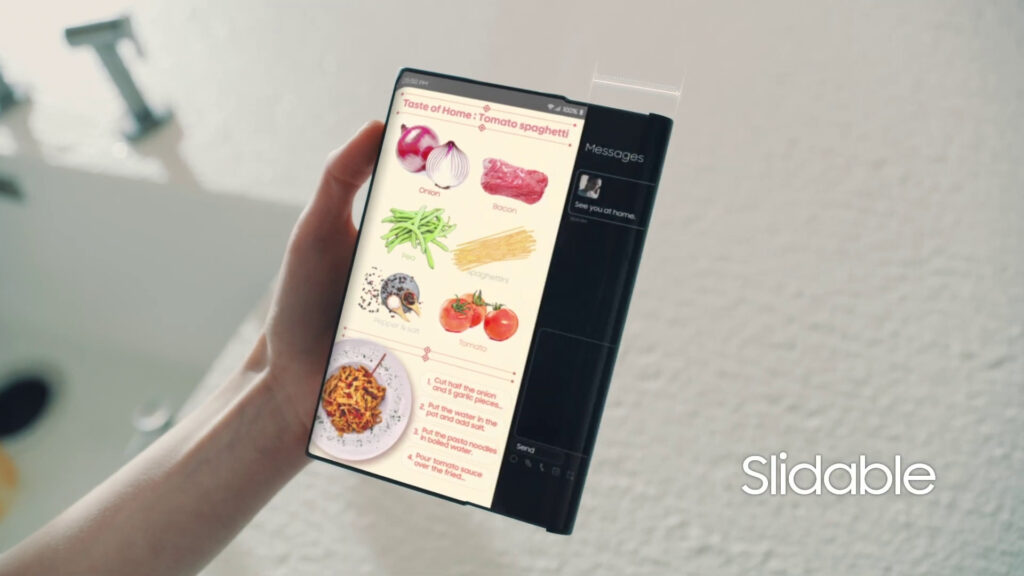
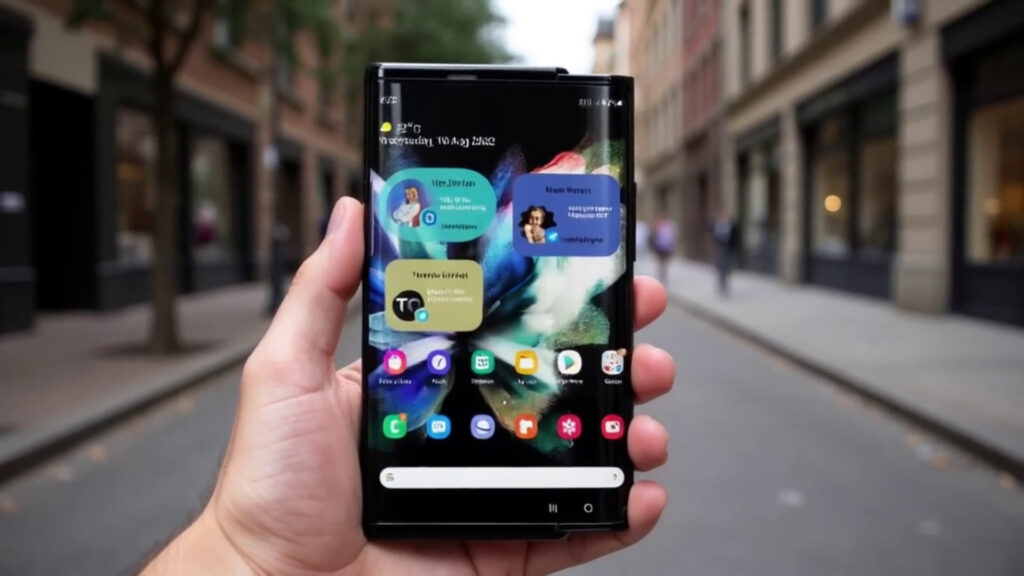
Separately, tipster xleaks7 on X linked a rumor about a “Galaxy Z Rollable” patent (via WearView). The patent illustrations reportedly show a handset that slides out to the left from a static shell, widening the display while keeping part of the chassis fixed. The result reads like a transformation from a standard slab phone into something closer to a book-style foldable or small tablet, but without a visible crease.
The drawings also point to a triple-camera array with a raised island positioned on the left, nested into a rear cutout that doubles as a housing when the device retracts. That cutout isn’t just aesthetic; it suggests Samsung is thinking about how to protect protruding hardware during the roll-back motion, where tight tolerances and moving parts become reliability risks.
Patents, of course, are ideas secured in legal form. They often represent multiple design branches, not a final bill of materials. Still, repeated patents plus a consumer-facing brand trademark is a stronger pattern than either alone.
Practical challenges: durability, thickness, and repairs
The excitement around rollables is easy to understand: more screen when you want it, less phone when you don’t. The harder part is making it survive pockets, grit, drops, and thousands of expansions. Samsung itself teased rollable concepts at CES 2024, including “Rollable Flex,” described as expanding up to five times its original size. That kind of range is captivating, but it raises immediate questions about the internal rails, the motor or tensioning system, and the long-term wear on the panel.
A rollable also has to solve the “where does the screen go” problem. When a display rolls into a cavity, the device needs internal space, which can compete directly with battery volume, cooling, and camera hardware. If the phone becomes too thick or too heavy, it loses the everyday convenience that makes foldables appealing.
Repairability is another concern. Moving hardware, seals, and flexible panels can increase service complexity. Even if the display itself is durable, the mechanism has to stay aligned. Consumers may accept premium pricing, but they will not accept frequent failures.
Software, S Pen, and productivity on an expanding screen
If Samsung ships a Z Roll, software will be as important as mechanics. One UI already supports multi-window, drag and drop, and app continuity across foldable states. A rollable adds a new challenge: continuous resizing while the panel expands or retracts. Apps must scale smoothly, maintain aspect ratios, and keep UI elements reachable.
S Pen support, if real, would push Samsung to optimize palm rejection, latency, and pen UI for multiple sizes. The best outcome is a device that behaves like a phone at 6 to 7 inches, then becomes a work surface at 9 to 12 inches. Reports in late 2024 even claimed a fully expanded 12.4-inch display, which would move the Z Roll into small-tablet territory and make multitasking genuinely useful: email plus document editing, or a timeline view beside a preview window.
Performance and battery efficiency will matter too. Expect Samsung’s latest flagship-class processor and AI-driven resource management to prioritize refresh rate, brightness, and background tasks depending on screen size. Bigger display, bigger power draw; the win is software that makes it feel consistent.
Timing, competitors, and what to watch next
Competition is real. Oppo and TCL have shown prototypes, and LG was arguably closest before exiting the smartphone market and scrapping its project. Samsung may not need to be first, but it will want to be the first to make rollables feel normal.
A 2026 arrival seems more realistic than an imminent launch, but watch for three signals: supply chain hints about flexible panel yields, accessory registrations for a pen-enabled rollable, and One UI features aimed at variable-width displays.
Conclusion
The Z Roll trademark doesn’t confirm a product, but it does suggest Samsung is preparing a serious identity for a rollable phone, potentially with S Pen support and productivity ambitions. If Samsung can balance durability, thickness, and software polish, rollables could become the next premium tier beyond foldables. Until then, the Z Roll is best read as a signal: Samsung wants the option to ship when the engineering is ready, and it doesn’t want the name available to anyone else.
Read More!