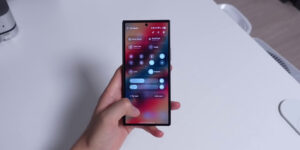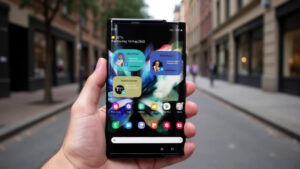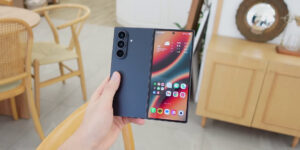
I’ve waited a long time for Samsung galaxy to fix what has always felt like the Galaxy Z Fold’s core problem: its proportions. The hardware has improved year after year, and Samsung’s multitasking features are genuinely strong, but the product still too often lands in an uncomfortable middle ground—priced like a mini tablet, yet shaped like a tall phone that happens to open.
That’s why the rumored Samsung Galaxy Z Fold 8 Wide has me more interested than I expected. After spending real time with larger foldables (including Samsung’s experimental directions), it’s become clear to me that “bigger” isn’t the point. “Better shaped” is. And if Samsung is truly moving toward a 4:3 internal display, it may finally be aligning the Fold with how people actually use it.
Why the Galaxy Z Fold has felt oddly compromised.
For years, Samsung’s book-style Fold has carried a design decision that never fully made sense for day-to-day use: the internal screen’s tall-ish feel and the resulting cramped split-screen layout. Even when you open the phone, many apps don’t feel like they’re breathing; they feel like they’re being stretched into a format they didn’t choose.
That has consequences. Multitasking—one of the main reasons to buy a foldable—can look impressive in demos but feel tight in practice. Two apps side by side on a narrow-ish canvas forces more scrolling, more awkward UI breakpoints, and more “why does this feel like two phones squeezed together?” moments.
Samsung has tried to compensate with software: better taskbars, improved multi-window controls, and more flexible layouts. Those features matter, but they can’t fully erase the feeling that the underlying canvas isn’t optimized for productivity. At $1,800+ in many markets, “it’s improved” isn’t the same as “it’s worth it.”
The Fold 8 Wide rumor: 4:3 could change everything.
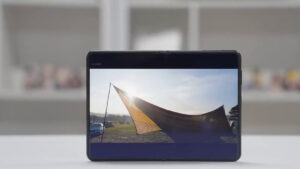
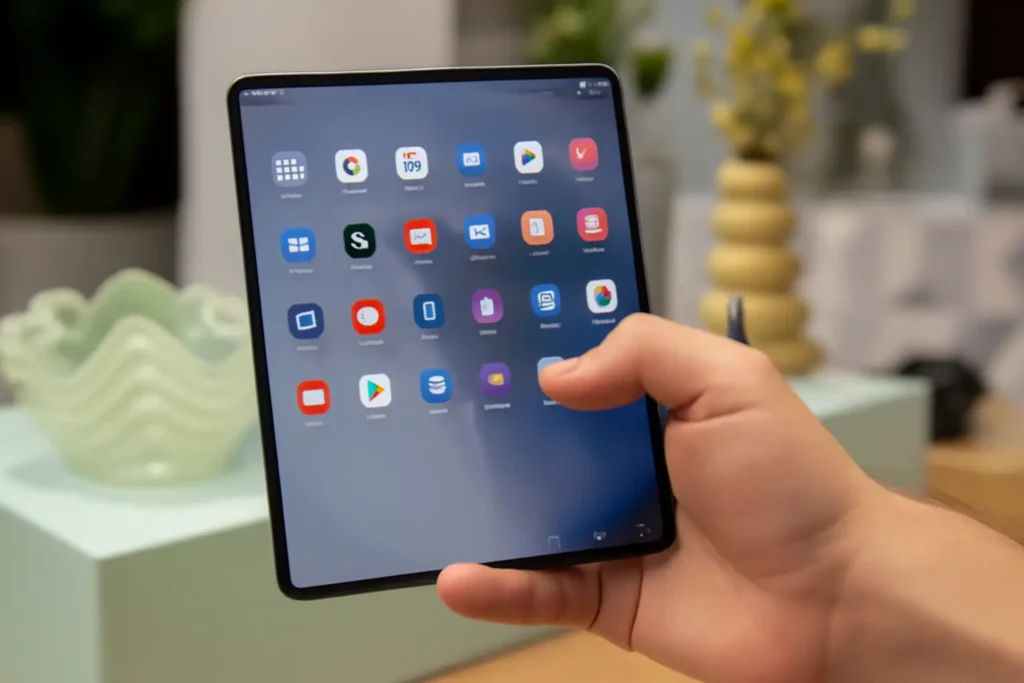
Rumors point to the Galaxy Z Fold 8 Wide using a 7.6-inch internal display with a 4:3 aspect ratio. If that’s accurate, it’s not a cosmetic tweak—it’s the kind of foundational change that can redefine the whole product.
A 4:3 canvas tends to do three things well: First, it makes two-app multitasking feel natural. Each app gets a shape closer to what developers design for on tablets and wider Android layouts. Second, it improves document work: editing slides, reading PDFs, handling spreadsheets, and even simple email triage benefit from width more than height. Third, it usually leads to a more comfortable cover display. A wider internal format often pairs with a less narrow outer screen, which matters because many people use the cover screen far more than foldable fans like to admit.
Timing could also help Samsung. Wider app support is moving from “nice to have” to “required.” With Google pushing developers toward better large-screen layouts (and with Android continuing to mature its foldable and tablet UI expectations), Samsung finally has a stronger ecosystem foundation to build on than it did in the early Fold generations.
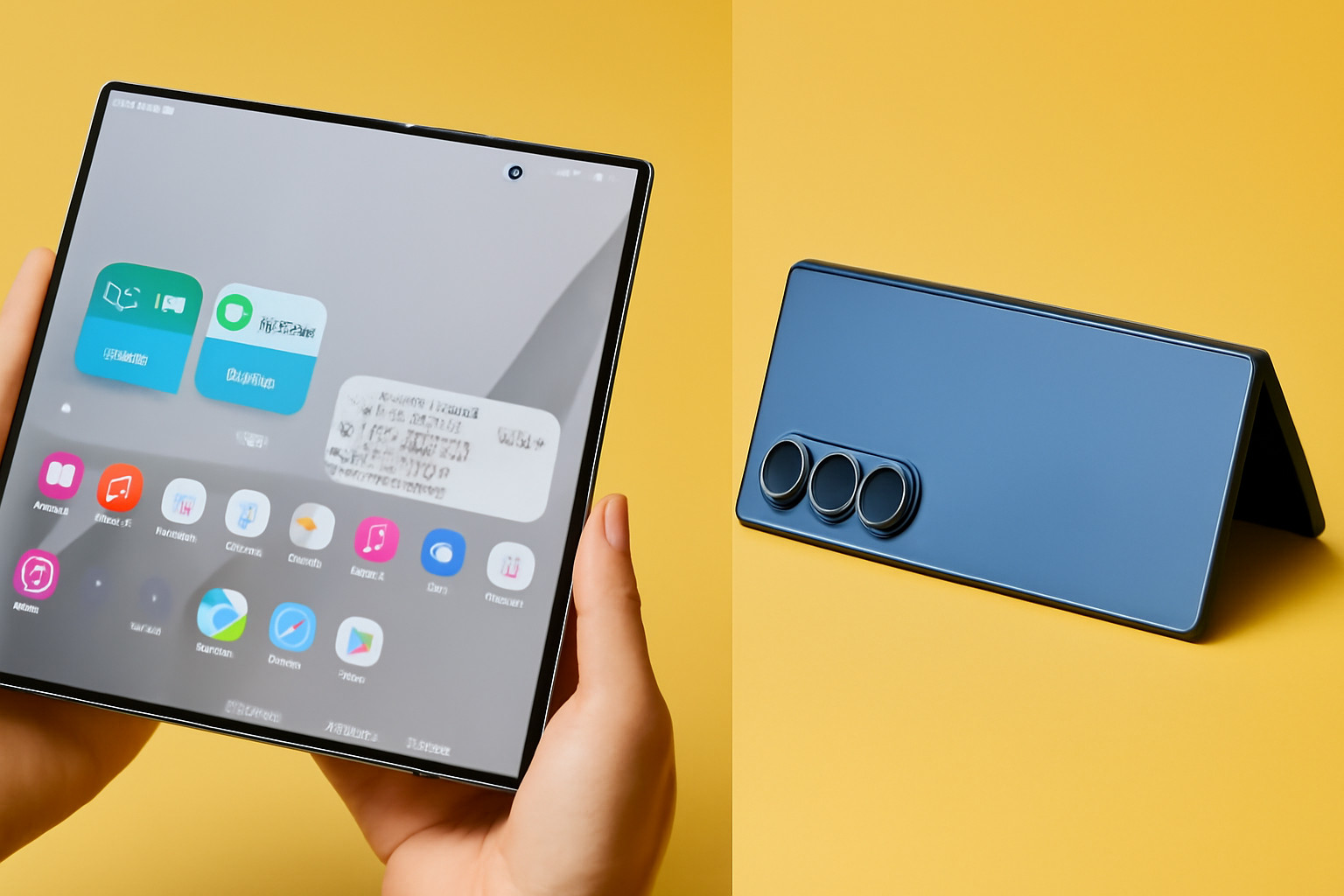
If Samsung gets the proportions right, the Fold can stop feeling like a phone that opens and start feeling like a pocketable productivity device that also happens to make calls.
Pixel Fold proved the wider idea works (eventually).
The clearest proof that “wider wins” already exists: the original Google Pixel Fold. I didn’t like that device at launch. It felt unfinished, the software didn’t consistently respect the form factor, and the value was hard to justify next to more traditional flagships.
Then something interesting happened: Google kept working on it. Updates improved stability, smoothed performance, and (in many cases) addressed early battery complaints. Over time, the Pixel Fold’s hardware design started to look less like a misstep and more like a template.
Most importantly, the wider approach delivered real-life usability benefits. The cover screen was simply easier to type on. You could spend a whole day on the outer display—emails, chat, quick docs—without feeling like you were settling for a “temporary” screen. And when you did unfold, split-screen multitasking felt roomy in a way Samsung’s narrower layouts sometimes don’t.
If Samsung can marry that kind of width with its already-strong multitasking software, the result could finally match the Fold’s price and ambition.
Two book-style Folds at once feels like a risky bet.
Leaks suggest Samsung may ship the Fold 8 Wide alongside a standard Galaxy Z Fold 8, plus the Galaxy Z Flip 8. Keeping the Flip makes sense; clamshell foldables serve a different buyer and solve a different problem.
But two book-style Folds in the same generation raises uncomfortable questions. Foldables are expensive to engineer, expensive to market, and dependent on deep software attention. Splitting effort across two similarly positioned devices risks creating two good phones instead of one great one.
There’s also the question of identity. If the Wide exists because the traditional Fold shape isn’t ideal for productivity, then what is the standard Fold 8 for? And if the answer is “for people who prefer the old ratio,” Samsung needs to be sure that audience is big enough to justify the complexity.
If Samsung is serious about making the Fold feel like a premium tool, the Wide model is also the obvious place to lean into pen support again. A broader 4:3 canvas is simply more inviting for sketching, markup, handwriting notes, and document review—tasks that help justify the foldable premium beyond novelty.
The rest of the Fold 8 leaks: small cuts, magnets, momentum.
Outside the big “Wide” rumor, the leaked details sound like classic Samsung iteration: slightly refined hardware, slightly cleaner design. One report points to a smaller front camera cutout—shrinking from roughly 3.7 mm to 2.5 mm—which could make the display feel more immersive. It’s a small change, but on a device you stare at all day, it adds up.
More intriguing is the possibility of magnetic wireless charging compatibility, hinted at by circular cutouts on dummy units and talk of Qi2 alignment. If it ships, it could make charging stands, car mounts, and accessory ecosystems far more seamless—especially for a device category that already demands accessory compromises.
All of this is reportedly aimed at a mid-2026 release window, with competition heating up and persistent chatter that Apple is preparing its own foldable push. If Samsung wants to hold the narrative, it needs more than thinner hinges and cleaner camera holes. It needs a Fold that feels like it finally makes sense.
Conclusion
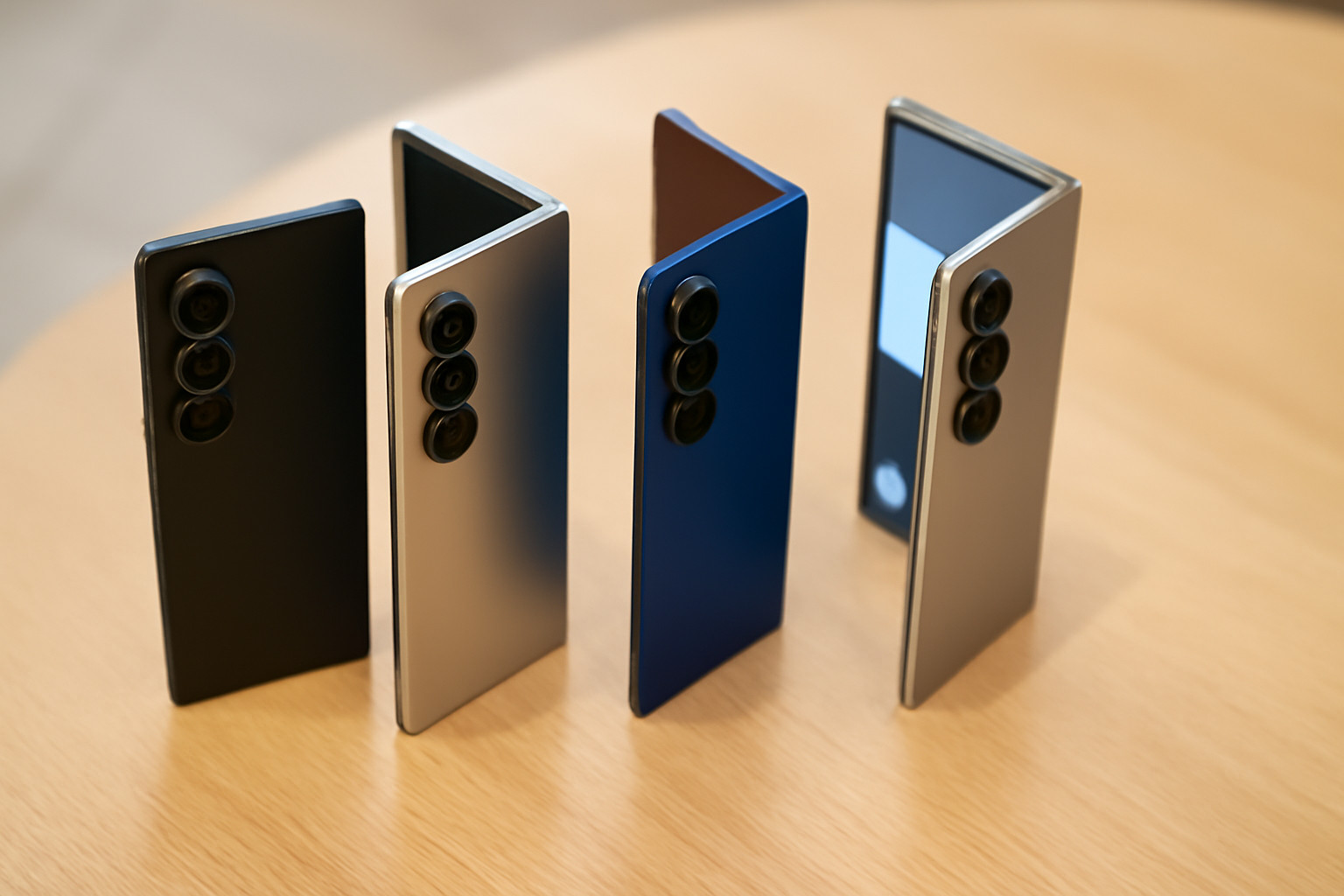
If the Galaxy Z Fold 8 Wide is real—and if it truly commits to a 4:3 internal display—it could be the first time in years that Samsung’s Fold line feels like it’s correcting its own course, not just refining it.
Book-style foldables haven’t gone mainstream for clear reasons: price, durability anxiety, and too many compromises in everyday ergonomics. A wider design doesn’t solve everything, but it tackles the most visible compromise: the feeling that the Fold’s big screen isn’t shaped for the work it’s supposed to enable.
Samsung doesn’t need more foldables. It needs the right foldable. The Fold 8 Wide might be the closest the company has come to delivering it.
Read more!