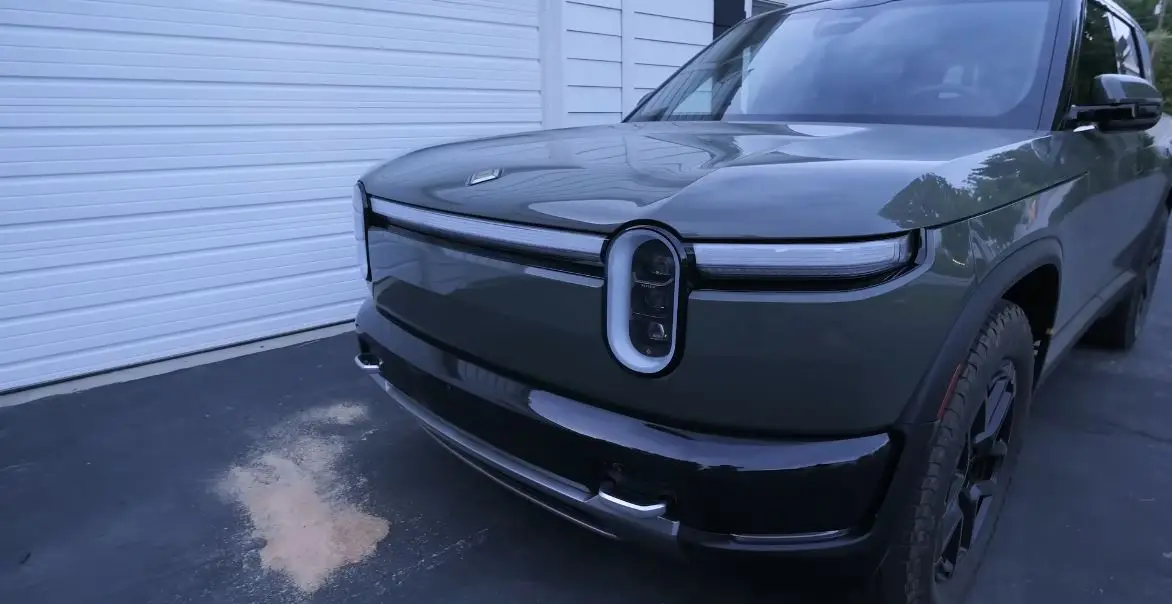

LiDAR R2 is Worth Waiting For sounds like the obvious conclusion after Rivian’s latest clarity on autonomy hardware. If the launch R2 arrives on Gen 2 autonomy hardware without LiDAR, why not wait for the newer, sensor-rich version already on the roadmap?
That question dominates forums and reservation holder chats for a reason. A vehicle purchase north of $50,000 makes hardware timing feel critical. Yet when you read what Rivian actually said and compare it to how autonomy upgrades usually roll out, a different question matters more.
Will the LiDAR-equipped R2 be better? Probably. Will it be better enough to justify waiting? That answer looks far less certain.
What Rivian Revealed
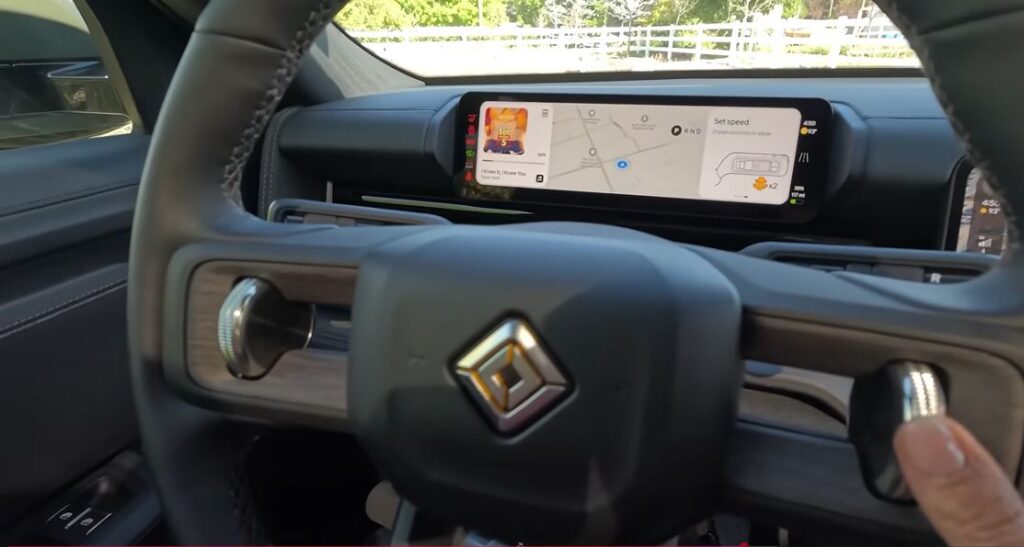
Rivian did not frame this as two separate autonomy worlds. It described a near-term plan where launch R2 vehicles and future LiDAR-equipped vehicles share a similar feature path for years.
For reservation holders, that single point changes the decision. Many people assume the first R2s will ship as the “old version.” Rivian’s messaging points the other way. Launch R2 should deliver an autonomy experience broadly comparable to today’s Gen 2 R1 vehicles, then ride a shared software roadmap forward.
That roadmap includes familiar, concrete features people actually use. Expect supervised driver assistance to expand over time with items like stop sign and traffic light handling, auto park, and eventually more capable point-to-point driving across highways and surface streets.
Those are not presented as LiDAR-exclusive perks. Rivian has signaled they belong to the broader Gen 2 plan as well. If you worry that a launch R2 will get orphaned, Rivian’s own positioning does not support that fear.
The more honest takeaway looks like this. Rivian plans to keep Gen 2 relevant for a long stretch, while it builds toward a higher ceiling with the next hardware platform.
What Gen 2 Really Gets
The practical value of autonomy in the next few years will come down to supervised driving. That includes smoother highway behavior, fewer disengagements, better merges, more confident lane selection, and consistent performance in messy real-world traffic.
That is the experience Rivian implies the launch R2 will target. It also matches how autonomy progress usually arrives. Software improvements ship gradually. Safety validation takes time. Regulatory approvals move slower than product roadmaps.
So the launch decision should start with a simple checklist. Do you want the vehicle soon, at the lowest complexity, with the earliest access to the platform? Gen 2 fits that. Do you plan to keep it for a long time? That is when LiDAR hardware might matter more, but only if Rivian unlocks meaningfully higher autonomy levels.
This is why the question “Is LiDAR better?” misses the point. The better question asks what you can actually use, and when.
| Category | TECNO CAMON Slim | Galaxy S25 Edge | Practical Impact & Notes |
|---|---|---|---|
| Thickness | 5.95 mm | Similar class | Curved edge profiles can drastically optimize in-hand ergonomics, making devices feel slimmer than their official metric. |
| Battery Capacity | 5,160 mAh | 3,900 mAh | A larger physical cell provides a substantial power buffer, mitigating battery anxiety during heavy-use days. |
| Out-of-Box Charging | 45W Charger Included | Charging Brick Omitted | Including a high-wattage power adapter in the retail box reduces total upfront ownership costs. |
| Display Refresh Rate | 144 Hz | 120 Hz | While 144 Hz offers marginal fluid improvements, the real-world performance difference is visually negligible compared to 120 Hz. |
| Software Lifecycle | 1 OS Upgrade / 2 Years Security | Typically Longer | Extended support cycles inherently favor device longevity and long-term security compliance. |
Where LiDAR Changes Things
LiDAR’s real advantage does not show up as a minor improvement in lane centering. It shows up as a possible path to higher autonomy levels, especially Level 4 in defined conditions.
Level 4 means the vehicle can handle driving without human supervision in specific places or under specific rules. That is not the same thing as a Level 2 system that demands constant attention. With Level 4, the system owns the driving task when it is active, including many edge cases that currently force human takeover.
Rivian has hinted at a gradual rollout approach, likely starting with highway-focused “eyes-off” capability before expanding to harder environments. But timing remains the largest unknown. Autonomy timelines have a long history of slipping across the industry, even for companies with massive data and years of iteration.
This is where many buyers should slow down. Hardware potential does not equal real-world capability. A LiDAR-equipped R2 might support Level 4 someday, but Rivian has also suggested capabilities will remain largely similar for the next several years. In other words, you may wait a long time for a benefit you cannot use yet.
There is also an overlooked twist. The LiDAR fleet can help Gen 2 vehicles.
When LiDAR-equipped Rivians collect data, they can provide highly accurate ground truth about the world. Cameras and neural networks predict lanes, curbs, pedestrians, and obstacles. LiDAR can validate those predictions. That feedback improves training.
As Rivian’s driving model improves, Rivian can deploy those improvements across the fleet. That includes Gen 2 R2 vehicles and today’s Gen 2 R1T and R1S. Gen 2 may never gain the hardware needed for higher autonomy levels, but it can still gain smarter perception and planning from better training.
So the LiDAR R2 might not only help its own owners. It could also accelerate better supervised driving for everyone else.
The Smarter Buying Call
If your main goal is the best usable autonomy over the next two to three years, waiting may not pay off. Rivian indicates both hardware versions will chase similar supervised features for years, and supervised driving improvements should land fleet-wide.
If you want the vehicle for its core value, a launch R2 could be the better move. You start enjoying the vehicle earlier. You also benefit from software progress as Rivian ships it.
Waiting starts to make sense in narrower cases. You plan to keep the R2 for a decade. You strongly value the chance of higher autonomy levels later. You can tolerate an undefined timeline. You also accept that regulatory and safety hurdles may delay the payoff.
That is why LiDAR R2 is Worth Waiting For is not a universal truth. It is a bet. Launch R2, by contrast, looks like a purchase based on what Rivian says you will actually get soon.
Conclusion
LiDAR R2 is Worth Waiting For only if you buy the long-term autonomy promise and you can live with uncertainty. Rivian has not positioned the launch R2 as a dead-end product. It has positioned it as part of the same evolving autonomy roadmap, with similar capabilities for the next several years.
For many reservation holders, the most practical decision is simple. Buy the R2 when it fits your life and budget, not when a future hardware package might unlock a capability no one can schedule yet.
If Rivian delivers Level 4 down the road, the LiDAR-equipped R2 could become the clear winner. Until then, the launch R2 looks less like a compromise and more like the version that lets you start driving now, while the software keeps getting better.
Find more helpful Galaxy Z Fold 8 guides and articles below