
If you’re tracking Apple’s Mac roadmap, the next big checkpoint could land at the end of 2026: a MacBook Pro with the M6 chip. Before getting into what that might look like, it helps to reset where things stand now.
At the end of October 2025, Apple refreshed the MacBook Pro with M5, while the iPad Pro and Vision Pro also moved to M5. Then, in March 2026, Apple followed up with the higher-tier MacBook Pro configurations powered M5 Pro and M5 Max. The cadence is familiar: a fall update, then a spring expansion for the faster variants.
Where the MacBook Pro design stands right now
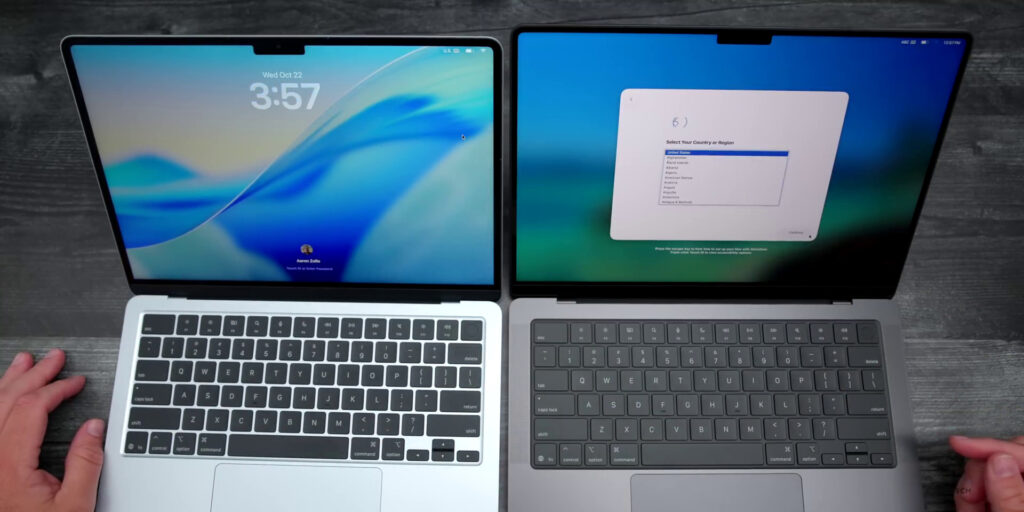
Since the M1 Pro and M1 Max redesign in 2021, the MacBook Pro’s look and feel has stayed largely consistent. It’s been a strong era for the product: mini-LED, ProMotion, and the return of key ports helped make the current chassis a practical work machine again.
That consistency matters for M6 expectations. There’s plenty of talk online about an OLED MacBook Pro, and even occasional chatter about an “Ultra” branding shift. The more likely outcome, though, is that the baseline M6 MacBook Pro keeps the same exterior design language as the M5 (and M4, and M3).
Apple has done this kind of staggered redesign before. When the M1 Pro and M1 Max models debuted, the entry-level MacBook Pro kept the older Touch Bar design. That older body design even carried into the M2 generation, and it wasn’t until M3 that the baseline model fully aligned with the newer look. If Apple repeats that pattern, OLED may arrive first on M6 Pro and M6 Max models, not the baseline M6.
The upgrades most likely to matter on the baseline M6
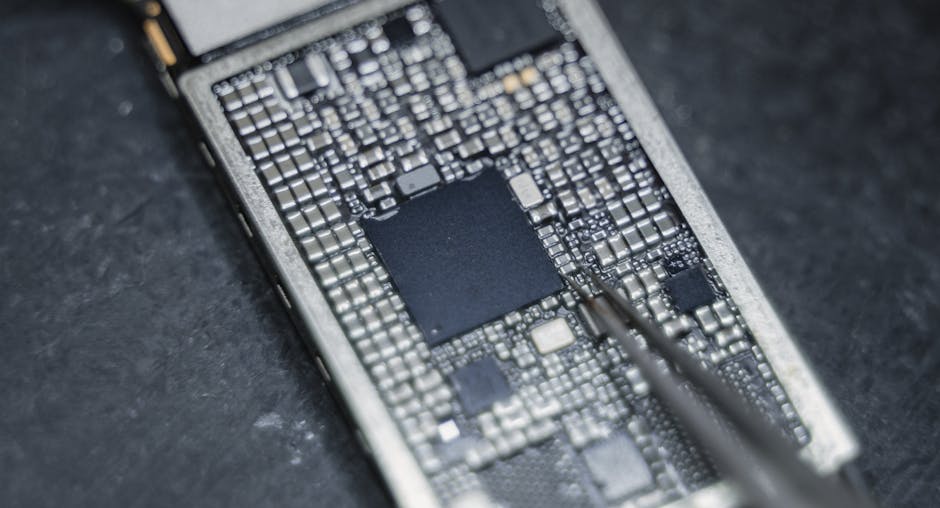
If the baseline M6 doesn’t bring a fresh chassis or OLED, the real story becomes the chip. The biggest rumor is a move to a 2-nanometer process. If that happens, expect two practical benefits: stronger performance and better efficiency. Shrinking transistors typically allows higher performance at similar power, or similar performance at lower power, and either direction can translate into longer battery life, cooler operation, or more sustained speeds.
There’s also talk that the baseline GPU could finally jump beyond the long-running 10-core configuration (seen since M2) to as many as 12 GPU cores. For general readers, that mainly shows up as faster creative workloads, smoother high-resolution editing, and better performance in graphics-heavy apps and games.
Other specs may remain familiar. Don’t be surprised if Apple keeps the same general memory and storage tiers, with a similar “entry” configuration and the same paid steps upward.
Release timing and pricing: what could change the plan
Apple’s most predictable window for MacBook Pro launches has been October or November, and M6 could follow that pattern in late 2026. The biggest risk to timing is supply, particularly around memory components. Even with Apple designing its own chips, unified memory availability still depends on broader supply conditions, and disruptions can ripple into product timing.
If constraints persist, an M6 launch could slip into early 2027, potentially around February or March. If supply stabilizes, late 2026 remains the cleanest bet.
As for price, if the baseline model keeps the same design and the main upgrade is the M6 chip itself, a flat starting price is the most plausible outcome, with upgrade pricing for memory and storage staying consistent as well.
Conclusion

The baseline MacBook Pro M6, if it lands in late 2026, is shaping up to be a “power-first” update: big gains from a likely 2nm chip and possibly more GPU cores, with the overall design staying familiar. OLED may still be coming, but it’s more likely to arrive first on the higher-end M6 Pro and M6 Max models rather than the entry M6.
If you’re considering an upgrade, the key question is simple: do you want the next major performance jump, or are you holding out for a display redesign?
Read more!