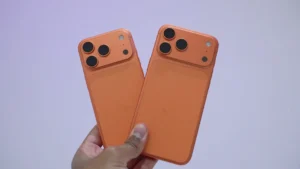
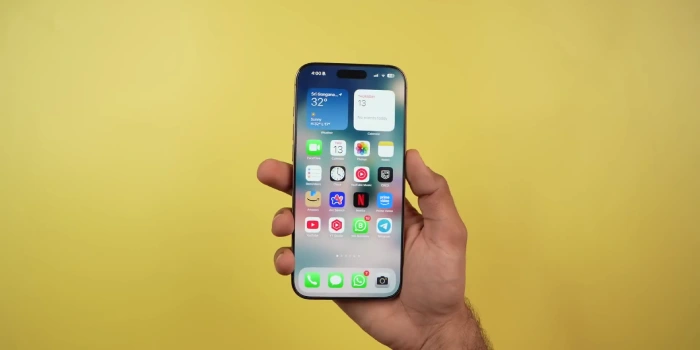
Apple iPhone 18 Pro Max: projected release date, estimated pricing, and upgrades.
Apple: We are officially in the year of the iPhone 18 Pro Max and iPhone 18 Pro since it is 2026.
According to sources, the next Pro models, which are planned for release in September 2026, may include some of the largest software and technological updates in recent memory.
According to speculations, Apple’s new A20 Pro CPU, which is built on cutting-edge 2nm technology for speedier speeds and higher energy economy, will be incorporated in the iPhone 18 Pro and 18 Pro Max.
The combination may result in higher overall performance and longer battery life when utilized with Apple’s proprietary 5G modem.
The Pro Max is predicted to contain up to 2 TB of storage, and charging speeds will presumably stay at 40W.
With a heavier focus on Apple Intelligence, iOS 27 will presumably launch with the iPhone 18 series.
With the aid of higher-bandwidth RAM obtained from Samsung, delayed AI features, such as a more advanced Siri, are projected to finally arrive.
AI is at the center of Apple’s forthcoming iPhones thanks to this blend of enhanced software and new hardware.
Significant enhancements to the camera are also conceivable; it is rumored that Apple will employ a 200 MP Samsung sensor for the first time, in addition to a variable aperture and a revised Camera Control button.
Together with the bigger storage and quicker internal components, these changes suggest that the iPhone 18 Pro Max may be a terrific substitute for the iPhone 17 Pro Max.
Date of release for the iPhone 18 Pro Max
Given Apple’s prior remarks, the iPhone 18 Pro Max and iPhone 18 Pro are expected sometime in September 2026.
It’s essential to note that the vanilla iPhone 18 may not be introduced in the fall of 2026 but rather in the spring of 2027.
The new Pro pair will presumably also be accessible at shops in a short 10-day period. We found out that the iPhone 18 Pro began the initial phases of manufacture around the end of 2025.
Prices and deals for the iPhone 18 Pro Max
According to reports, Apple will employ TSMC’s 2-nanometer processors with the iPhone 18 Pro and Pro Max in 2026.
The cost of each chip would grow by roughly $35 if 3 nm is shifted to 2 nm, which would hike the price by 70% from $50 to $85.
camera on the iPhone 18 Pro Max.
Primary camera: Samsung 200MP variable-aperture sensor
48 MP (4x–8x) telephoto camera Fusion 48 MP ultra-wide camera
Selfie camera: Center Stage 18 MP selfie
Production of image sensors for iPhones may commence in March 2026 at a US facility, most likely Samsung’s Austin, Texas plant, where Apple is supposedly partnering with the business to develop new semiconductor technologies.
This means that Samsung’s stacked CMOS sensor, likely a 200 MP variant, may be the first to be featured in the iPhone 18 range. This would be a considerable divergence from Apple’s present 48 MP restriction.
This report is likely to be real, given Samsung was supposedly recruiting expertise for their Austin facility before the end of 2025.
Verified, this would be the first time Apple has employed Samsung camera technology in iPhones, marking a radical change in a long-standing component relationship dominated by Sony, which has retaliated by producing its own 200 MP sensor.
According to a probable leak, the main and telephoto cameras on the iPhone 18 Pro may feature larger apertures, letting more light reach the sensor.
A variable aperture?
Additionally, as some have claimed, the iPhone 18 Pro pair may contain a variable aperture.
With variable aperture, a camera may control light and depth of field by modifying the lens opening; tighter apertures limit light while keeping more of the picture in focus, while wider apertures increase low-light performance and background blur.
This leak may prove to be correct, given the suspicions of variable aperture were re-expressed in mid-October 2025.
A new form of camera control button.
According to a more reputable source, Apple may simplify the Camera Control button on the iPhone 18, contrary to prior speculations that it will be abolished.
According to Weibo leaker Instant Digital, Apple may forgo the capacitive sensor and move to pressure sensing entirely for all button activities. The pressure-sensitive modules are allegedly in trial production.
Currently, the iPhone 16 recognizes taps, pushes, and swipes utilizing both capacitive and pressure sensors beneath a sapphire crystal surface.
The new method may operate similarly to Oppo’s Find X8 Ultra, which utilizes pressure alone to distinguish distinct motions.
Since the dual-sensor design is expensive to build and maintain, money is undoubtedly the biggest driver driving the move, even if features like Visual Intelligence are still crucial to the button’s usefulness.
Design of the iPhone 18 Pro Max
Although sources suggest a modest visual change—a slightly transparent glass section on the rear, presumably above the vapor chamber, for aesthetic reasons only—the iPhone 18 Pro is predicted to primarily preserve the design of the iPhone 17 Pro.
It is believed that the screen sizes, triple lens setup, and rear camera layout will not change.
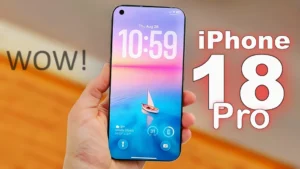
Under-display Face ID is likely to be incorporated in this year’s iPhone 18 Pro models, which would remove the Dynamic Island from Apple’s Pro line for the first time since the iPhone 14 Pro’s introduction.
The front-facing camera would still be visible via a small punch-hole cutout, but Face ID components would be covered beneath the screen.
As with the iPhone 17 Pro (which was thicker than the iPhone 16 Pro), Apple is also going to make the iPhone 18 Pro Max a touch thicker than the iPhone 17 Pro Max, maybe to accommodate a larger battery.
Read More: