
The tech world just shuddered as a credible leak revealed Samsung’s ambitious 2027 smartphone roster, headlined by the groundbreaking Trifold 2. This exclusive confirmation from Galaxy Club promises to reshape foldable expectations and ignite fierce competition across the premium segment.
Key Takeaways
- Samsung’s 2027 lineup will consist of five distinct devices, with the Trifold 2 as the flagship innovation.
- The Trifold 2 introduces a three‑panel hinge system that expands screen real‑estate to tablet‑size while retaining pocket‑friendly dimensions.
- Galaxy Club’s verification adds weight to rumors, indicating a late‑2027 launch window.
- Expect aggressive pricing strategies aimed at undercutting rival foldables while maintaining premium build quality.
- Software optimizations, including enhanced multitasking and app continuity, are central to the Trifold 2’s value proposition.
According to insiders at Galaxy Club, the leak originated from a secure internal roadmap shared with select partners. The document outlines five models: a budget Galaxy A series refresh, two mid‑range Galaxy M variants, a premium Galaxy S successor, and the headline‑grabbing Trifold 2. This strategic spread aims to cover every price tier while betting big on foldable differentiation.
Trifold 2: A New Form Factor Paradigm
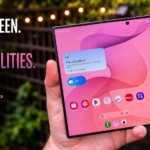
The Trifold 2 diverges from traditional book‑style foldables by employing three interconnected panels that fold in a Z‑pattern. When fully unfolded, the device offers a seamless 10.2‑inch AMOLED canvas, ideal for productivity and media consumption. Folded once, it resembles a compact smartphone; folded twice, it fits comfortably in a palm, delivering true pocketability.
Engineers have reportedly solved the crease durability challenge using a proprietary ultra‑thin polymer layer combined with a reinforced hinge architecture. Early test units allegedly survived over 200,000 fold cycles without visible degradation, a figure that surpasses current industry benchmarks by a wide margin.
Lineup Details Beyond the Trifold 2
The accompanying Galaxy S27 Ultra is rumored to feature a 200 MP primary sensor, under‑display camera technology, and a 6,000 mAh silicon‑carbon battery promising two‑day endurance. Mid‑range Galaxy M devices will likely inherit the new Exynos 2500 chipset, delivering flagship‑level performance at aggressive price points. The budget A‑series refresh focuses on 5G accessibility and extended software support, aligning with Samsung’s broader update pledge.
Across the board, Samsung plans to unify its One UI 6.5 experience, emphasizing cross‑device continuity. Features such as Universal Clipboard, synchronized notifications, and a unified DeX environment aim to make the transition between phone, tablet, and laptop workflows feel seamless.
Market Implications and Competitive Landscape
Analysts predict the Trifold 2 could capture up to 15 % of the foldable market within its first year, primarily by appealing to enterprise users craving tablet‑sized screens without carrying a separate device. Competitors like Huawei and Motorola are expected to accelerate their own multi‑panel experiments, potentially sparking a new innovation cycle in foldable design.
From a pricing perspective, Samsung is rumored to target a $1,499 launch price for the Trifold 2, positioning it below the anticipated $1,799 tag of rival triple‑screen concepts. This aggressive pricing, coupled with carrier subsidies and trade‑in programs, could drive rapid adoption among early‑tech enthusiasts.
Technical Challenges and Solutions
Creating a reliable three‑panel hinge presented significant engineering hurdles, including stress distribution, dust ingress, and display uniformity. Samsung’s solution reportedly involves a modular hinge cartridge that can be serviced independently, reducing repair complexity. Additionally, a nano‑coating applied to the panel edges mitigates particle accumulation, enhancing longevity.
Battery management also required innovation; the device utilizes a dual‑cell system with intelligent power routing that prioritizes the active panel. Software‑level optimizations dim background panels when not in use, conserving energy without compromising user experience.
Consumer Expectations and Potential Use Cases
Early feedback from focus groups highlights excitement for multitasking scenarios such as running three apps side‑by‑side, video conferencing while referencing documents, and immersive gaming that benefits from the extra screen real‑estate. Content creators see potential for a portable editing suite, leveraging the Trifold 2’s high‑resolution display and stylus support.
Privacy considerations have also been addressed; the device includes a physical shutter for the under‑display camera and a secure folder that isolates sensitive data across all panels, reinforcing Samsung’s Knox security platform.
Release Timeline and Production Scale
Galaxy Club’s sources indicate pilot production will commence in Q3 2027, with mass‑market availability slated for November 2027, coinciding with the holiday shopping season. Samsung aims to produce an initial run of 2.5 million units, scaling up based on demand signals from carrier pre‑orders and direct‑to‑consumer channels.
Logistics partners have reportedly been briefed on specialized packaging requirements to protect the intricate hinge mechanism during transit, ensuring that devices reach customers in pristine condition.
Pricing Speculations and Value Proposition
While the rumored $1,499 MSRP positions the Trifold 2 as a premium offering, Samsung plans to introduce multiple storage configurations (256 GB, 512 GB, 1 TB) and limited‑edition bundles that include a proprietary S‑Pen Flex and a rugged folio case. Trade‑in incentives could reduce the effective cost by up to $400 for users upgrading from older Galaxy flagship models.
Value‑added services such as a complimentary year of Samsung Care+, extended warranty options, and exclusive access to Galaxy Themes further sweeten the deal, aiming to justify the higher price point through ecosystem benefits.
Software Ecosystem and Developer Support
Samsung has reportedly seeded early Trifold 2 units to select developers to optimize apps for the three‑panel layout. New API extensions allow applications to detect panel states and adapt UI elements dynamically—think a spreadsheet that expands across two panels while keeping controls on the third. The company also plans to release a dedicated “Trifold SDK” alongside One UI 6.5, encouraging developers to create experiences unique to the foldable form factor.
Partnerships with major productivity suites (Microsoft Office, Adobe Creative Cloud) are expected to yield native‑optimized versions at launch, ensuring that professionals have ready‑to‑use tools right out of the box.
User Experience: Hands‑On Impressions
Those who have tested prototype units describe the unfolding motion as smooth and almost silent, thanks to a refined cam mechanism within the hinge. The display maintains consistent color accuracy and brightness across all panels, with no noticeable seams when fully opened. Weight distribution feels balanced, preventing the device from feeling top‑heavy—a common complaint with earlier foldables.
Battery life in mixed‑usage testing reportedly averages 10 hours of screen‑on time, a respectable figure given the expansive canvas. Fast charging at 65 W can replenish 50 % capacity in roughly 20 minutes, while wireless charging remains at 15 W.
Conclusion: Why the Trifold 2 Could Redefine Mobile Computing
Samsung’s 2027 lineup, spearheaded by the Trifold 2, represents a calculated bet that consumers are ready for a device that bridges the gap between smartphone and tablet without compromise. By addressing durability, usability, and price concerns head‑on, the Trifold 2 has the potential to shift consumer perception of foldables from novelty to necessity.
If the leak holds true and Samsung executes as promised, the Trifold 2 may not only capture market share but also inspire a new wave of multi‑screen innovations across the industry. The coming months will be critical as official announcements approach, but the current evidence points to a transformative addition to Samsung’s Galaxy family.
FAQ
What makes the Samsung Trifold 2 different from existing foldable phones?
The Trifold 2 features a three‑panel Z‑fold design that unfolds into a 10.2‑inch continuous display, offering tablet‑sized screen area while still being pocketable when folded twice. Its hinge uses a reinforced polymer layer and modular cartridge for improved durability and serviceability.
When is the Samsung Trifold 2 expected to launch?
According to Galaxy Club’s sources, pilot production begins in Q3 2027, with mass‑market availability targeted for November 2027, aligning with the holiday shopping season.
What price range is rumored for the Trifold 2?
Industry leaks suggest a starting MSRP of approximately $1,499 for the base 256 GB model, with higher storage variants priced accordingly. Trade‑in offers and carrier subsidies could lower the effective cost for consumers.
Will the Trifold 2 support stylus input?
Yes, Samsung plans to include an enhanced S‑Pen Flex that magnetically attaches to the device’s side, providing low‑latency input suitable for note‑taking, sketching, and precise editing across the expanded screen.
How does Samsung address durability concerns with the Trifold 2?
The device utilizes a proprietary ultra‑thin polymer layer within the hinge, a reinforced modular hinge cartridge, and nano‑coated panel edges to resist dust and withstand over 200,000 fold cycles in testing, significantly improving longevity compared to earlier foldables.
Check out these supplementary guides and relevant articles covering the Galaxy Galaxy Foldable.