What if your smartwatch could tell you you’re running on empty before you even feel it? Not by tossing out generic reminders, but by reading your sleep, stress, and cardiovascular strain and then nudging you away from a hard workout when your body clearly needs recovery.
That’s the direction Samsung signaled this week, and it didn’t arrive with a keynote, a flashy launch video, or a countdown clock. Instead, it came tucked inside a major Samsung Health update—an announcement many people skimmed and moved on from.
Look closely, though, and the message is hard to miss: Samsung Health is being positioned as the foundation for the next generation of Galaxy Watches, including what leaks have been pointing to for months—Galaxy Watch 9, Galaxy Watch 9 Classic, and a high-end Galaxy Watch Ultra 2 (with talk in some corners of an optional 5G model).
The quiet confirmation: “upcoming Galaxy Watch”
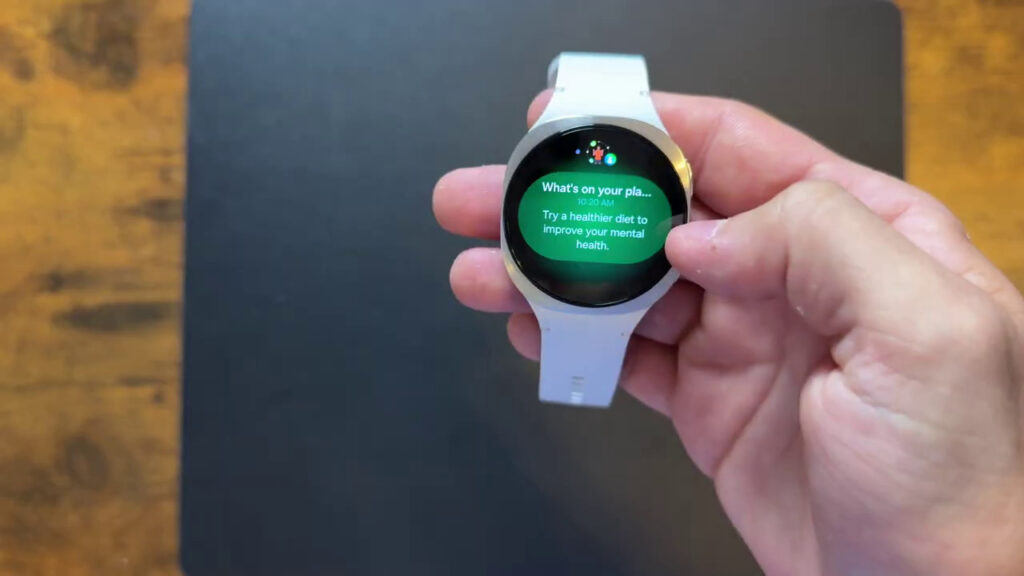
Samsung described its Health upgrade as “transforming the upcoming Galaxy Watch into a proactive, intelligent health partner.”
Two words do a lot of work there: upcoming Galaxy Watch. This isn’t a third-party rumor mill connecting dots. It’s Samsung acknowledging that new watches are on the near horizon, while also telling us what matters most to them about those watches: not a new case design or a faster chip, but a more hands-on health experience.
That choice is notable. Samsung is effectively using the Health platform as the product teaser. The implication is that the headline features of the next hardware won’t only be physical upgrades—they’ll be features you feel day-to-day through coaching, summaries, and alerts that adapt to how you’re doing.
Energy Score: the metric Samsung may put at the center
Samsung is leaning heavily into AI language, calling Samsung Health “a truly AI-powered health platform.” Marketing phrases can be cheap, but the feature set being rolled out suggests Samsung is trying to make the watch less of a passive tracker and more of a daily decision assistant.
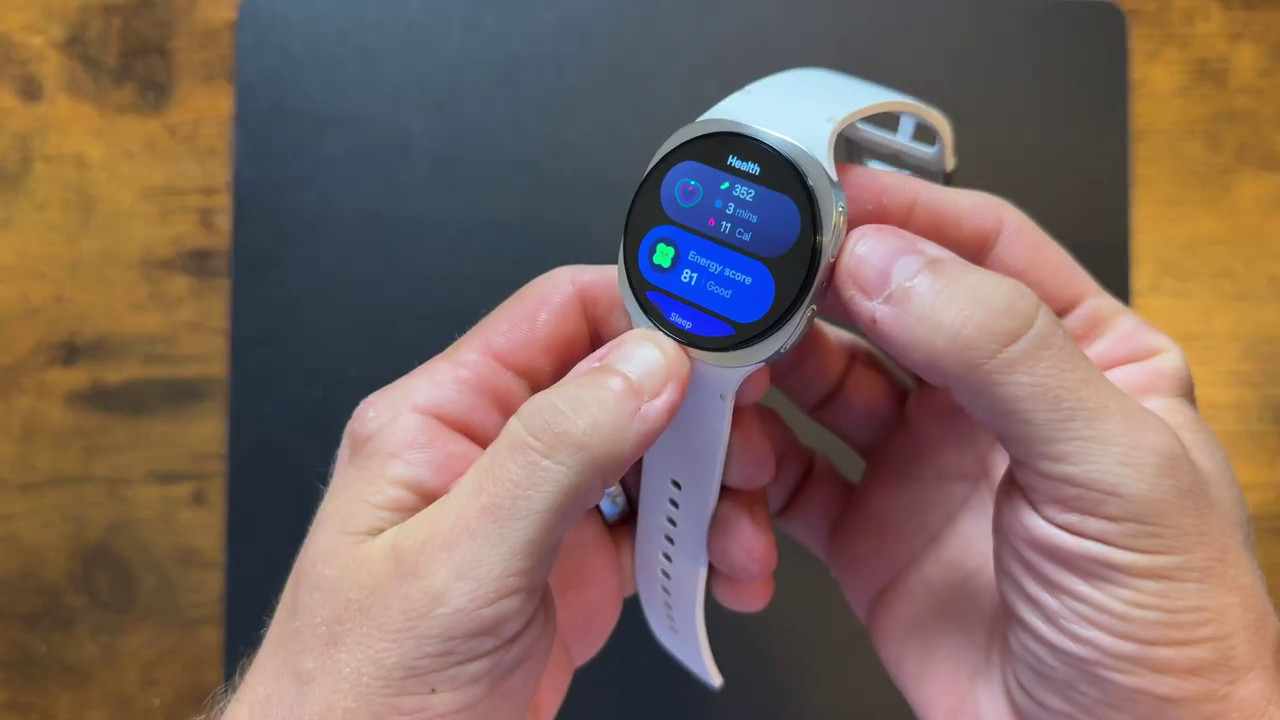
The clearest example is Energy Score. Think of it as a single, daily number built from five categories: Sleep Activity Nutrition Mindfulness Vitals
Plenty of wearables have attempted “readiness” scoring, and Garmin’s Body Battery is often the benchmark. What changes with Galaxy Watch is placement. On a phone, a readiness score is something you check once and forget. On your wrist, it can become the main interface—something you glance at before a workout, before a meeting, or halfway through the afternoon when you’re wondering why you’re fading.
If Samsung puts Energy Score prominently on the Galaxy Watch 9 experience—potentially even as a default watch face element—it could become Samsung’s equivalent to Apple’s Activity Rings: a simple, sticky metric that shapes daily behavior.
There’s also a product segmentation hint here. A simplified score may appeal to general users, while Ultra-branded buyers often want deeper data. If the Galaxy Watch Ultra 2 is aimed at more serious training, Samsung may relegate Energy Score to a secondary view and prioritize raw metrics, trends, and performance analytics up front.
Daily Cardio Load: coaching that reacts to your body
Samsung’s current running coaching tools can be helpful, but they’re typically plan-first: a schedule tells you what to do, and the watch helps you execute it. The limitation is obvious to anyone who trains consistently. A plan doesn’t know you slept poorly. It doesn’t know your legs are still heavy from two days ago. It doesn’t know you’re unusually fresh and could safely push harder.
Daily Cardio Load appears designed to fix that. Samsung describes it in terms of “accumulated cardiovascular strain,” which is a practical idea: measure how hard your body has been working over recent days, then adjust recommended intensity accordingly.
For general readers, the impact is simple: If your body is showing signs of fatigue, the watch can recommend an easier session or rest. If you’re well recovered, it can encourage a more challenging workout.
That’s the difference between a watch that tracks a run and a watch that helps decide whether the run is a good idea today. If Samsung brings this to the wrist in a timely, actionable way—before your workout begins, and even during it—it would be a meaningful step toward coaching that feels personal instead of prescriptive.
Fitness Index and comparisons: personalization with caveats
Another addition, Fitness Index, aims to summarize overall fitness and highlight strengths and weaknesses, including comparisons against other users.
There’s real value in benchmarks when they’re used responsibly. Many people don’t know if their cardio fitness is improving, flat, or slipping until they hit a wall. A well-designed index can make progress visible.
Still, comparisons need careful framing. Age, medication, injury history, and even sensor fit can affect readings. The best version of this feature will prioritize “you versus you” trends, then use peer comparisons as optional context—not the main grade.
If Samsung handles that balance well, Fitness Index could help Galaxy Watch 9 owners move from “I worked out” to “I’m improving in a measurable way,” which is what most people actually want.
Sleep tracking overhaul: five overnight bio-signals
Sleep is where Samsung has the most to prove. Users have long reported inconsistencies: sleep scores that don’t always match how they feel, or vary more than expected night to night. When trust breaks, engagement drops.
Samsung now says Samsung Health will track five key overnight bio-signals: Heart rate Heart rate variability Breathing rate Skin temperature Blood oxygen levels
Skin temperature is the tell. A phone can’t do that; a wrist device can. This strongly reinforces that the next Galaxy Watch generation is being built to capture more reliable overnight data and translate it into more credible insights.
It also puts pressure on the basics: overnight battery performance and sensor consistency. A watch that dies at 3 a.m. produces a broken report card. If Samsung wants to own the “proactive partner” promise, the Galaxy Watch 9 line needs to be the kind of device you can wear all night, every night, without micromanaging charging.
What it means for Watch 9, Classic, and Ultra 2
Taken together, this Samsung Health update reads like a product strategy document made public by accident.
Energy Score suggests a simpler daily health snapshot that could define the mainstream Galaxy Watch 9 experience. Daily Cardio Load points to adaptive training guidance that responds to your recovery, not just your calendar. The expanded overnight bio-signals indicate a serious push to improve sleep credibility, with sensors and battery life under the spotlight.
And for the rumored Galaxy Watch Ultra 2, the subtext is clear: Samsung may offer two flavors of “smart.” One is glanceable and guided. The other is more technical, for people who want the details behind the recommendation—possibly with premium connectivity options like 5G depending on the final hardware lineup.
Conclusion
Samsung didn’t need a big event to preview where it’s going. With a quiet Samsung Health update, it effectively confirmed new Galaxy Watches are coming and outlined the kind of experience they’re designed to deliver: wearables that don’t just record what happened, but help you choose what to do next.
If Samsung can make Energy Score genuinely useful, make Daily Cardio Load feel accurate, and finally deliver sleep tracking people trust, the Galaxy Watch 9 family could be one of the more practical upgrades we’ve seen in years—because it would change how the watch fits into a normal day, not just how it looks on a spec sheet.
Read More!