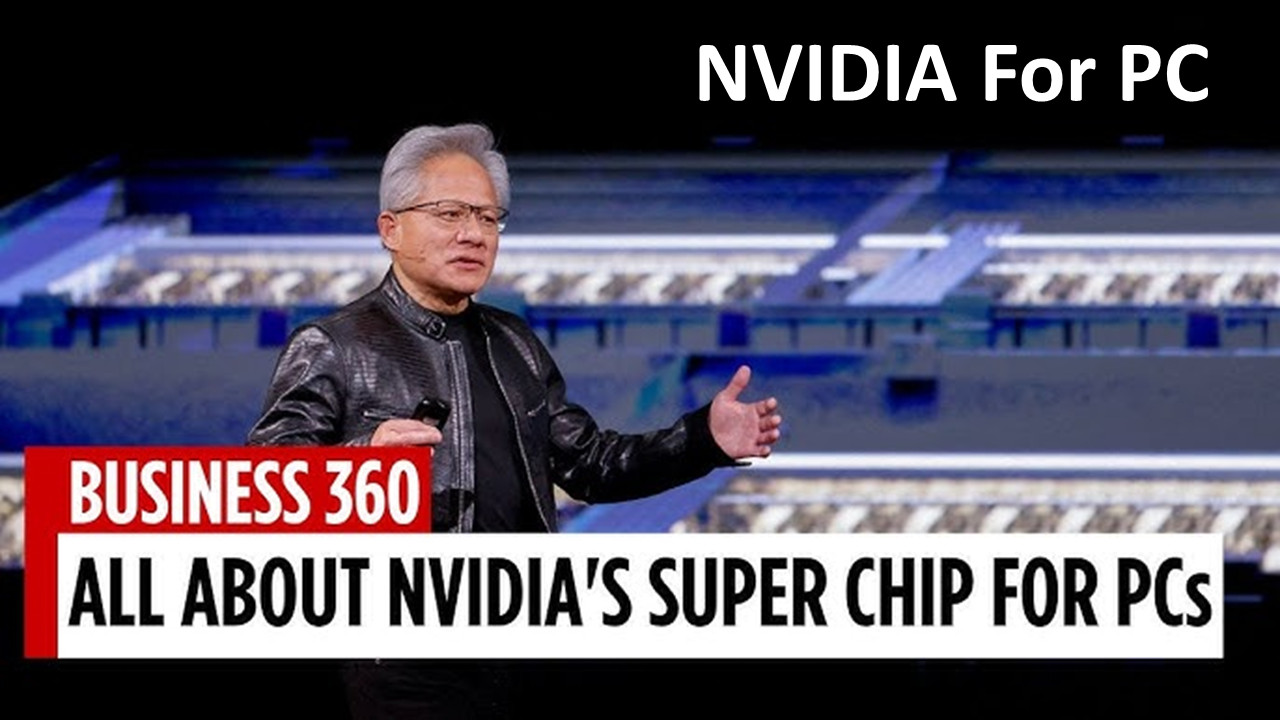
Nvidia is making a louder push into the everyday PC, and it’s doing it with a new chip it says is built for “personal AI agents.” At Computex in Taipei, chief executive Jensen Huang unveiled the RTX Spark chip and pitched the moment as a turning point for computers, comparing it to the phone’s jump into the smartphone era.
The headline idea is simple: AI features shouldn’t feel like occasional cloud add-ons. Nvidia wants them baked into the machine you use at home or work, always available, and fast enough to feel like a “teammate” instead of a tool.
The timing is also interesting. Just a day before the keynote, the US tightened guidance around exporting the most advanced AI chips to subsidiaries of Chinese firms outside China, adding a fresh layer of tension around who gets access to top-tier compute.
What Nvidia just announced at Computex
The new chip is called RTX Spark, and Nvidia describes it as “a new superchip… for the era of personal AI agents.” That wording matters: Nvidia isn’t positioning this as just another graphics upgrade for gamers, even though “RTX” is a familiar label to anyone who’s followed its GPU line.
Huang’s messaging leaned into reinvention. He framed AI-enabled PCs as a step change in what people expect from a computer: less like a static piece of software you operate, more like an assistant that can act on your behalf. Think: searching, summarizing, drafting, and automating tasks without you constantly copy-pasting between apps.
Nvidia’s bet is that the next wave of consumer computing won’t be defined only by thinner laptops or longer battery life. It’ll be defined by local AI capability: running models efficiently on-device, keeping more data on your machine, and reducing reliance on paid cloud compute for everyday tasks.
Why RTX Spark is a big shift for the PC market
Nvidia has long been the powerhouse behind GPUs, chips that started as video game graphics engines and became a core ingredient for modern AI. For years, its biggest AI story has been data centers: warehouses of compute that train and serve large models. RTX Spark signals a more direct play for the consumer PC category.
Forrester analyst Charlie Dai called it a “paradigm shift” from being a component supplier to becoming an “architecture owner” in the PC market. In plain terms: Nvidia wants more control over how the whole AI-PC experience is built, optimized, and marketed, not just selling a chip and letting the rest of the system decide the user experience.
That puts it on a collision course with familiar names: Intel and AMD in traditional PCs, Qualcomm in Windows-on-Arm laptops, and Apple, which controls both the silicon and the system experience in Macs. If Nvidia can convince buyers and developers that “AI PC” really means “Nvidia inside,” it changes the balance of power.
Who’s building these PCs, and when you can buy them
RTX Spark won’t be a niche prototype locked behind a developer program. Nvidia says it will be included in a new line of Windows PCs from Lenovo, HP, Dell, Microsoft Surface, Asus, and MSI, with availability expected in the autumn. Acer and Gigabyte models are set to follow.
That lineup is a big deal on distribution alone. Lenovo, HP, Dell, and Apple made up almost 75% of the global PC market in the first quarter of this year, according to Gartner. Getting major OEMs on board means Nvidia isn’t just announcing a chip; it’s announcing shelf space.
For general buyers, the takeaway is straightforward: you won’t need to custom-build a desktop or hunt for a specialty laptop. If Nvidia’s plan holds, RTX Spark machines will show up where most people already shop for PCs.
The price and performance question everyone will ask
The excitement around “AI PCs” often hits a practical wall: what will it cost, and who is it really for?
Industry analyst Ian Fogg at CCS Insight warned that the shift is “likely to come with a significant price tag,” with Nvidia aiming at buyers who want “workstation-class performance.” That suggests early RTX Spark systems could land closer to premium laptops than mainstream budget machines.
Whether consumers bite will depend on what RTX Spark enables that feels tangible. If the benefits are mostly subtle (slightly faster photo edits, slightly better video calls), many people will stick with what they have. If the benefits are obvious (instant transcription, on-device summarization, reliable offline AI tools, smoother creative workflows), paying more becomes easier to justify.
It also matters how these systems perform under real workload pressure: battery life, thermals, and sustained performance. AI tasks can be bursty or constant. A laptop that runs an AI feature well for 30 seconds but throttles after 10 minutes won’t win long-term trust.
Microsoft, AI agents, and Nvidia’s software “orbit”
A big part of the announcement is a partnership with Microsoft. Nvidia says RTX Spark will support a “robust secure Windows platform” for AI agents, meaning autonomous software that can act more independently than a typical chatbot. Nvidia even name-checked examples like OpenClaw as the kind of agentic software it expects developers to build for this new class of machine.
Microsoft CEO Satya Nadella framed it as a broad goal: “unmetered intelligence to every home and every desk with Windows,” and called RTX Spark “a real breakthrough” toward that.
There’s also a developer angle. Semiconductor analyst Dr Ian Cutress said Nvidia’s move gives developers “a reason to stay within its own software and hardware orbit.” Nvidia’s advantage isn’t only chips; it’s the ecosystem around them. If RTX Spark makes it easier to build and run AI apps that perform best on Nvidia hardware, that could create a familiar pattern: developers optimize for the platform that’s fastest and most common, and the platform becomes even more attractive.
The geopolitics in the background: tighter US export rules
Behind the consumer-friendly messaging, there’s a harder reality shaping the AI chip market: export controls.
On Sunday, the US Department of Commerce’s Bureau of Industry and Security published guidance clarifying that a license is needed to export the most advanced AI chips to subsidiaries of Chinese companies based outside China. The aim is to close a potential loophole and limit access to high-end compute that can accelerate advanced AI development.
This matters because Nvidia sits at the center of the AI boom. Data centers powering AI have helped push Nvidia to a stock market valuation above $5tn. When regulation shifts, it can reshape where Nvidia sells top-end products and how it segments chips for different regions and use cases.
RTX Spark, notably, is framed around PCs and personal AI. But the broader backdrop is that AI compute is now a strategic resource, and the rules around it are becoming more specific, not less.
Conclusion
RTX Spark is Nvidia saying, clearly, that AI isn’t only a cloud feature you rent by the month. It’s something it wants running on your personal computer, built into Windows machines from the brands people already buy, and tuned for a future where AI agents do more than answer questions.
The open questions are the ones buyers will care about most: how much these PCs cost, how big the day-to-day benefits feel, and whether “AI teammate” turns into a must-have feature or just another spec on a product page. Either way, Nvidia is no longer content being the company behind the scenes. With RTX Spark, it’s trying to redefine what a PC is for.
Read More!