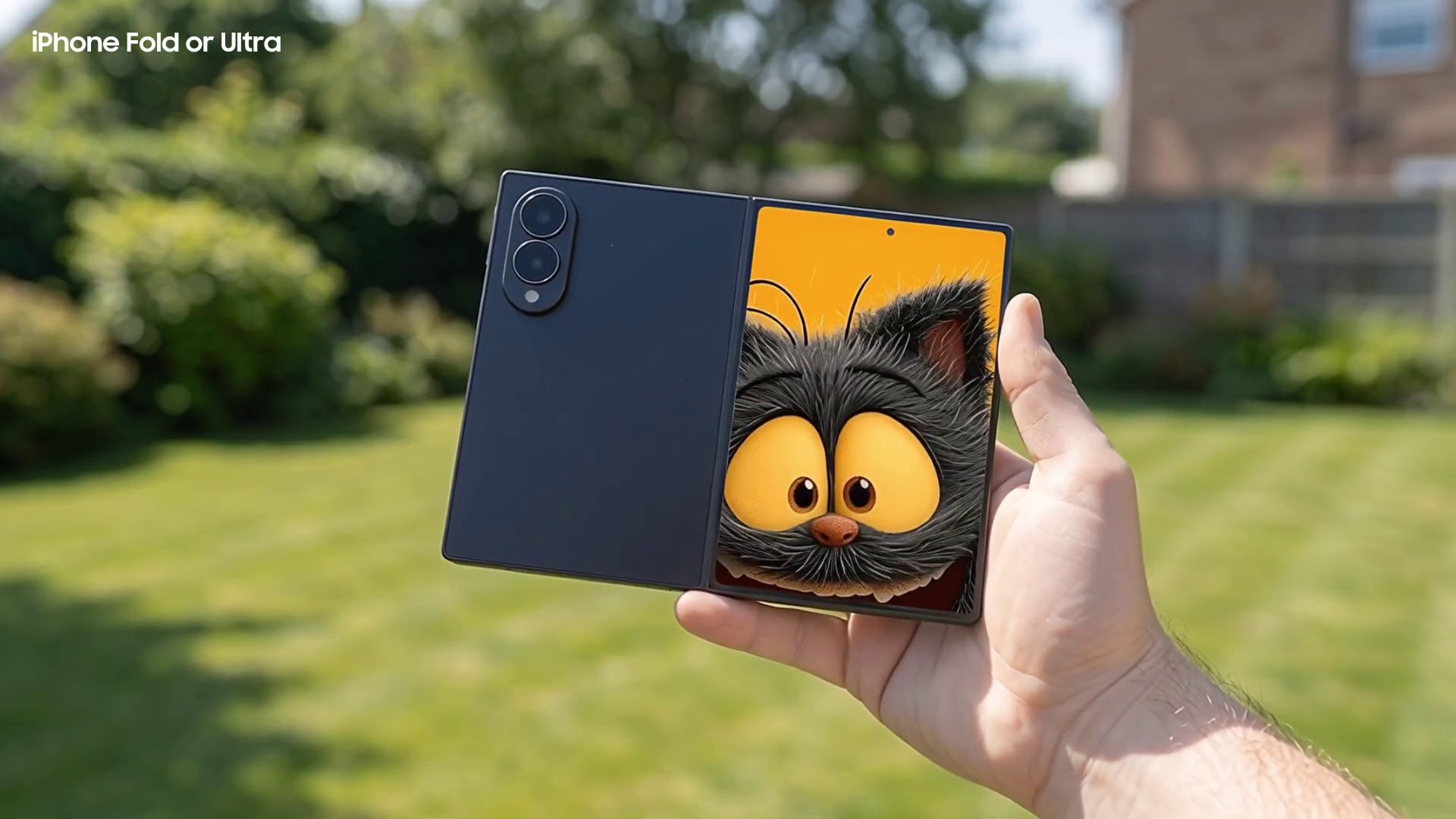
For months, the working assumption has been simple: Apple’s first foldable iPhone, widely referred to as the iPhone Ultra, shows up alongside the iPhone 18 Pro lineup in September. Not everyone agrees on the name, but the timing has been the heartbeat of the rumor mill.
Now that rhythm has been interrupted by a report out of Greater China that claims Apple is slipping the foldable by roughly four months, pushing availability into early 2027. That idea immediately lit up forums and comment sections, because a foldable iPhone is the kind of product that attracts equal parts hype and anxiety.
But a well-known leaker, Fixed Focus Digital, isn’t buying it. In a blunt response, the leaker dismissed the delay claims as “Fake news,” and doubled down by calling a longer push “Even more absurd.” That doesn’t confirm Apple’s plans, of course, but it does reframe the debate: is this a real supply chain warning sign, or just another case of rumors outrunning reality?
What sparked the iPhone Ultra delay talk

The latest round of delay chatter traces back to reports published via Taiwan’s United Daily News Group (UDN), one of the region’s biggest news portals. The key claims were attention-grabbing: the foldable iPhone would cost around $2,000 for the base model, could reach $2,200 with higher storage, and would land much later than expected.
The headline-grabbing part wasn’t only the price. It was the timing. The reporting pointed to supply chain indications suggesting a delay of at least four months, with the strongest interpretation being an early 2027 launch rather than a September debut next to iPhone 18 Pro and iPhone 18 Pro Max.
That kind of delay matters because Apple typically treats the September iPhone event as a single, global moment. If the foldable misses that window, it reshapes the narrative: instead of “Apple enters foldables on its own terms,” it becomes “Apple is late, and it’s still working things out.”
The report also suggested Apple might still preview or announce the foldable at the September event, then ship it later. That distinction is important. Apple has done staggered availability before, but a four-month wait on a brand-new product category would be unusual enough to feel like a problem, even if it’s just logistics.
The leaker’s rebuttal and what it really means

Fixed Focus Digital’s response was short, sharp, and extremely shareable. Two separate delay statements got two separate takedowns: “Fake news” for the first, and “Even more absurd” for the second. The leaker also implied that if anything slips, it would be minor, on the order of a month.
There are two ways to read that confidence.
First: the leaker may have visibility into the production timeline through sources closer to assembly, component orders, or Apple’s internal schedules. If that’s the case, the message is basically, “Relax, nothing is breaking.”
Second: the leaker may simply trust the established pattern of Apple’s development cycle more than secondhand interpretations of supply chain noise. Foldables are complex. A single hiccup in hinge yield, ultra-thin glass supply, or display lamination could create real bottlenecks. But a bottleneck doesn’t always equal a public delay, especially if Apple has planned buffers or multiple suppliers.
The caveat is right there in the open: Fixed Focus Digital didn’t provide evidence or sources with the rebuttal. That doesn’t make it wrong. It does mean readers should treat it like what it is: a credibility-based counterclaim, not an official correction.
Launch timing: September event vs early-2027 release
Here’s the launch calendar people are circling right now, based on the most repeated claims across leaks and reporting:
September window: iPhone 18 Pro, iPhone 18 Pro Max, plus the foldable iPhone Ultra (or a similar “Ultra” branded device). Early next year: base iPhone 18 and iPhone Air 2.
UDN’s reporting disrupts the first line by suggesting the foldable slips into early 2027, potentially lining up closer to Samsung’s early-year flagship cadence. That would put Apple’s foldable conversation in the same season as devices like a hypothetical Galaxy S27 Ultra launch in January or February 2027.
But even the delay report left room for a September stage moment. If Apple announces in September and ships later, it still “arrives” in the iPhone 18 Pro era while avoiding a hard promise on day-one availability.
Fixed Focus Digital’s position pushes back on the entire premise of a major shift. If the leaker is right, the foldable stays on track for the usual Apple-style rollout: announced and shipped without a long suspense gap. And if there is a slip, it’s closer to a typical supply ramp adjustment than a calendar rewrite.
Price shock, foldable market bets, and the design twist
The reported $2,000 to $2,200 price band is doing its own damage and its own marketing at the same time. To put it in plain numbers, $2,000 is about 66 percent higher than a $1,199 iPhone Pro Max baseline in the US. In Europe, rough conversions plus regional pricing could easily push it into the €2,400 neighborhood, depending on configuration and taxes.
That sticker shock is also why market-share predictions are so bold. One research estimate cited in the reporting suggests Apple could grab 30 percent of the foldable market and sell 11 million units by 2027. That’s an aggressive bet, but it tracks with how Apple tends to enter categories: fewer models, higher margins, and a buyer base that’s willing to pay for a new form factor if it feels polished.
On the design side, the most interesting leaks aren’t about color options or camera bumps. They’re about Apple potentially dropping familiar features to make the foldable work.
Two rumored sacrifices stand out: MagSafe and the Action Button. If true, those are not random omissions. Foldables fight for internal space, structural rigidity, and thickness targets. A device rumored to be as thin as 4.5mm when unfolded doesn’t have much margin for extra layers.
Then there’s the bigger twist: Touch ID in the side power button, potentially replacing Face ID. That would be a dramatic shift, but it’s also a practical one. Face ID can get complicated when a phone is partially folded, used at odd angles, or designed with an internal display that demands different camera placement. A side-mounted fingerprint sensor is boring in the best way: it just works, even when the device is half-open on a desk.
The “passport-like” form factor rumor, with a phone that opens to a tablet-like 7.8-inch display, also suggests Apple is aiming for a mini-iPad experience rather than a narrow, tall foldable phone. That’s a clear product choice: fewer compromises on screen usability, potentially more compromises on one-handed use.
Conclusion
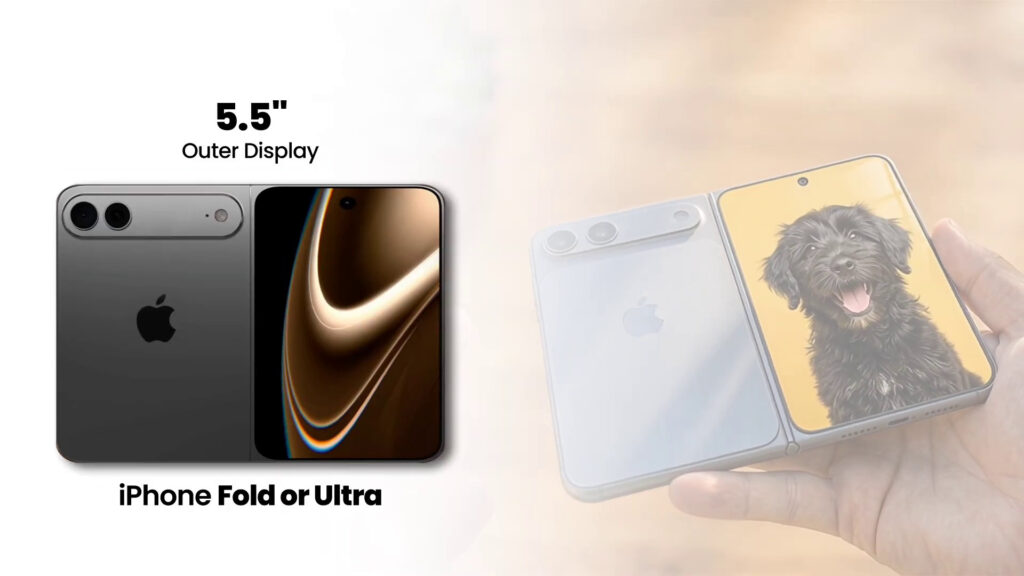
Right now, the iPhone Ultra delay story is a tug-of-war between a supply chain flavored report and a credibility-driven denial from a leaker with a track record. UDN’s reporting paints a picture of a pricey, ambitious device that might not be ready on Apple’s traditional iPhone timetable. Fixed Focus Digital calls that picture “Fake news,” with only a small slip even being plausible.
Until Apple speaks, the honest takeaway is this: the foldable iPhone is coming, it’s likely to be expensive, and the biggest question is whether Apple treats it like a September headliner or a product that needs extra runway. If the leaker is right, Apple fans can keep their calendars largely unchanged. If the supply chain whispers are right, the wait might stretch just long enough to test everyone’s patience.
Read More!