
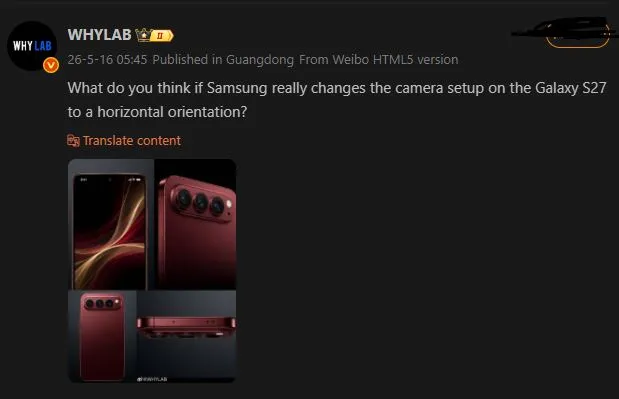
When Ice Universe posted concept renders on April 29, 2026, the internet did what it always does: it argued about whether Samsung is copying the Pixel. But the bigger story isn’t aesthetic. It’s mechanical.
The render shows a Samsung Galaxy S27 Ultra with a horizontal, pillbox-style camera bar replacing the vertical camera island that’s defined the Galaxy S Ultra look since the S21 Ultra. If accurate, it would be Samsung’s most significant rear design change in six years. And the likely driver is a feature Samsung has wanted for at least one generation already: built-in Qi2 magnets for native MagSafe-style wireless charging and accessories.
Why the Camera Is Moving
Qi2 isn’t just “better wireless charging.” The big user-facing change is magnetic alignment and accessory compatibility without needing a special case. To do that, the phone needs physical room for a copper charging coil and a ring of magnets, typically centered on the back for balance and alignment.
Samsung’s problem is that the current vertical camera placement occupies the exact internal real estate where that coil-and-magnet assembly wants to live. A horizontal camera bar pushed toward the top edge clears the central zone, making the geometry workable. That’s why Pixel comparisons miss the point: Samsung and Google can land on similar layouts because the internal packaging constraints are similar.
This also explains why the change, if it happens, is likely to stick. It’s not a seasonal refresh; it’s a structural accommodation for magnets, coils, and thermal and shielding considerations that come with them.
A Second Attempt at Qi2, With Cost Pressure
Reports suggest Samsung tried to include magnets in the Galaxy S26 series and didn’t get it over the line. The S27 is positioned as the next attempt, but there’s a big variable: cost.
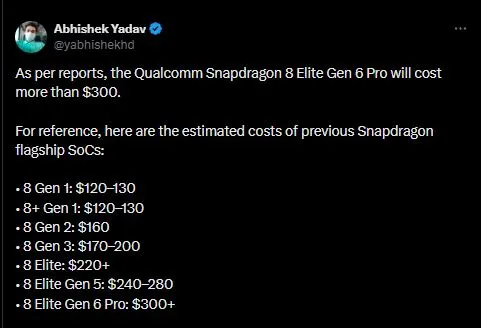
Qualcomm has hinted Samsung’s next non-foldable flagship could use a Snapdragon 8 Elite Gen 6 Pro, and one rumor pegs that chip at more than $300 per unit. If the prior generation sat roughly in the $240 to $280 range, that’s a meaningful jump, and it lands on a bill of materials already under pressure from cameras, displays, and battery upgrades. Samsung can eat margin, raise prices, or cut/shift features. If costs spike, Qi2 magnets could slip again to the S28 depending on market conditions.
Samsung may also lean more heavily on Exynos in some regions. Separately, the Exynos 2700 is rumored to move away from Fan-Out Wafer-Level Packaging (FOWLP), a change reportedly motivated by profitability despite FOWLP’s thermal advantages.
The Bigger Camera Tradeoff: Losing the 3x Lens
The more divisive rumor isn’t the camera bar. It’s the camera itself.
The Galaxy S27 Ultra is expected to drop the 3x telephoto entirely, leaning on the 200MP main sensor to crop in for 3x framing while keeping a 5x periscope. In bright light, high-resolution cropping can look surprisingly close to optical at 3x. In low light, it’s a different story: less light per pixel, heavier processing, and more noise reduction artifacts. People who shoot portraits, street, and indoor events at 3x will notice.
On the lineup side, leaks point to four models: Galaxy S27, S27 Plus, S27 Pro, and S27 Ultra. The Pro is described as “Ultra hardware minus S Pen” in a smaller body, targeting buyers who want top-tier performance without the Ultra’s size or stylus commitment. A January or February 2027 launch is the current expectation.
Conclusion


If the S27 Ultra’s cameras move into a horizontal bar, the most practical explanation is also the most important: Samsung is trying to make room for native Qi2 magnets. That’s not a cosmetic trend chase; it’s a packaging problem with a clear payoff for charging alignment and accessory ecosystems.
The debate worth watching isn’t “Pixel-like or not.” It’s whether Samsung can deliver Qi2 magnets while juggling higher silicon costs, potential regional chipset strategy shifts, and a camera decision (dropping 3x optical) that will matter far more to real users than the shape of the bump.
Read More!